
REVIEW · GUIDED
Guided tour of Cusco and its 4 ruins
Cusco, compressed into one focused loop. I like how this guided tour threads together the big names: Qoricancha with its Inca-Spanish blend, and Sacsayhuamán with the kind of stonework that makes you look twice. You also get a handy minibus setup that keeps the day moving without turning into a taxi or bus scavenger hunt. One drawback to watch for is timing. If the order of stops changes on your day, you could feel rushed, especially if the Cathedral and Plaza de Armas are top priorities.
The best part for me is the way the guide turns ruins into a story you can follow, not just a list of walls and courtyards. I also appreciate that the tour is designed as a real “Cusco highlights” loop, ending back near the Plaza de Armas so you can continue your day without chaos. The tour is only 6 hours on your schedule, but you’ll still want to budget time for entry tickets you pay separately.
Finally, plan around entrances and costs. The $20 tour price covers pickup, minibus transport, and a guide, but Cathedral of Cusco, Qoricancha, and the “4 ruins” tickets cost extra. If you’re comparing options, add those in so you can judge the value honestly.
Key takeaways
- Qoricancha Temple of the Sun, a major Inca religious center, plus the Inca-Spanish fusion you’ll see up close
- Sacsayhuamán fortress, guided focus on why it’s considered one of the Incas’ greatest architectural works
- Qenqo shrine and Puca Pucara (Red Fortress), combining ritual space with watchtower function
- Tambomachay, the Inca Bath, tied to worship of water and practical engineering
- Pickup and minibus transport included, helping you cover multiple sites without figuring logistics
More that leaves from a Urubamba hotel door
- Cusco:Sacred Valley Pisaq,Ollantaytambo,Chinchero with Lunch★ 4.8 · 183 reviews
- From Cusco: Chinchero, Moray, Maras and Ollantaytambo★ 4.5 · 83 reviews
- Cusco: One Day Tour to Machu Picchu with Train Transfers★ 4.8 · 28 reviews
- Cusco: River Rafting Adventure Full Day | Adrenaline Tour★ 4.9 · 23 reviews
How the Cusco loop works, from Plaza de Armas to your drop-off
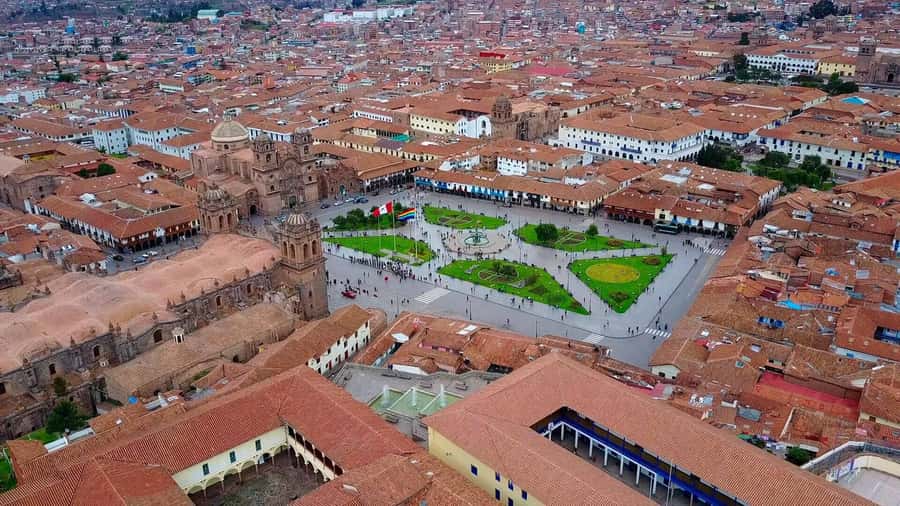
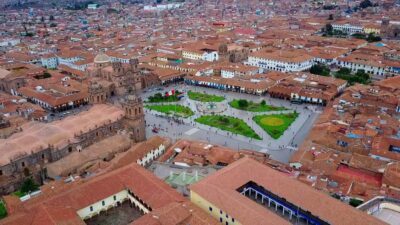
This tour is built around a classic Cusco starting point, the area of the Plaza de Armas and the Cusco Cathedral. You meet at a set point, then get picked up and routed into the city center first, which helps you get your bearings quickly before heading out.
From there, the day follows a simple rhythm. You do the Cathedral area, then walk to Qoricancha nearby, and then switch to the minibus for the outer ruins. That pattern matters because Cusco is walkable in spots, but the ruins are not close enough for a comfortable stroll between them.
You’ll also end near the Plaza de Armas after the main run of the tour. The activity is listed at 6 hours, while the “tour time” is described as roughly 4.5 hours near the center. In real life that usually means you have some extra time built in for pickup, transfers, and ticket lines.
Entering Cusco Cathedral and Qoricancha: Inca gold, Spanish architecture, and a living city
The morning start focuses on architecture you can’t really replicate on your own without planning. You enter Cusco Cathedral first, so you can see how Spanish religious power was layered over an Inca city. The tour explanation highlights one detail worth looking for: many decorative elements are said to be made with Inca gold, which is the kind of fact that changes how you see the artwork.
After the Cathedral, you walk to Qoricancha, also known as the Temple of the Sun. This is the big “wow” stop in the early part of the day because Qoricancha was one of the most important religious centers of the Inca Empire. What makes it especially interesting is the stated fusion between Inca and Spanish culture. You’ll be able to connect the dots visually, instead of treating it as two separate timelines.
The construction date is described as still a mystery, which is a nice reminder that not everything about the Incas fits neatly into a single textbook line. When a place keeps some secrets, you tend to pay better attention to what is actually in front of you, like shape, layout, and how later building adapted the earlier sacred space.
A practical note on tickets
You do not have Cathedral or Qoricancha entry included in the $20 price. The Cathedral ticket is listed at 40 S/ (10.70 US$) for foreign visitors, and Qoricancha is 15 S/ (4 US$) per person. So you’ll want to plan to pay these on arrival with your guide’s help, and not expect everything to be covered upfront.
Sacsayhuamán fortress: why the Incas went big on stone
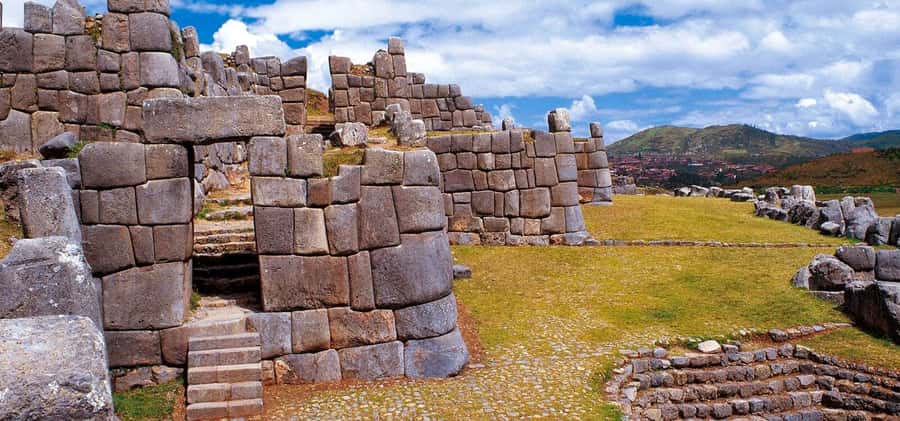
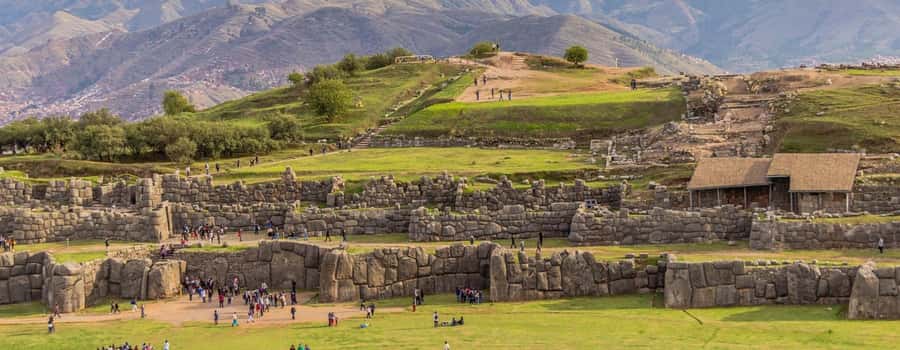
Once the city-center stops are done, you jump back into the minibus and head to the outer ruins. After about half an hour of travel, you arrive at Sacsayhuamán, the fortress that dominates the Cusco skyline.
This is where you get a focused guided experience. The tour description specifically says you’ll enjoy a guided tour at Sacsayhuamán, learning why it’s considered one of the Incas’ greatest architectural works. If you like archaeology that has a clear “why,” this is the stop that typically delivers it. The shapes, the stone placements, and the scale are the kind of things your brain understands faster when a guide explains the logic behind it.
Even if you’ve seen photos, Sacsayhuamán has a different effect in person because you can step around the structure and judge it from multiple angles. The stones are the main event, but the fortress setting also helps you understand how visibility and defense fit into a larger worldview.
More days with a guide attached
What to watch for
This part of the day depends on timing. If you’re the type who hates rushing, arriving at Sacsayhuamán early in the sequence helps. If your day’s order gets rearranged, it could compress how much time you have for Sacsayhuamán and the later ruins.
Qenqo shrine and Puca Pucara: ritual space and the Red Fortress
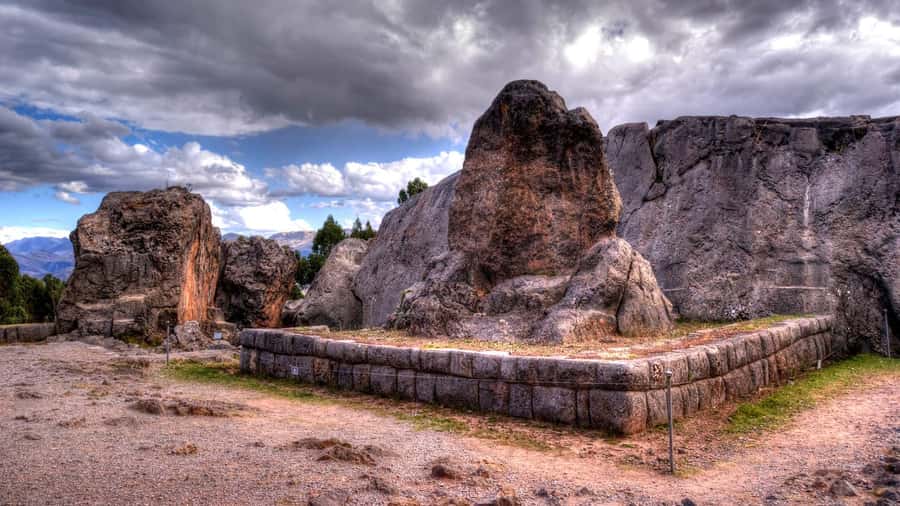
After Sacsayhuamán, the tour continues by minibus to Qenqo, described as one of the most important sanctuaries of the time. This matters because it’s not just a dramatic structure. A shrine is about function, like how people would gather, worship, and mark sacred space. A good guide can make that distinction clear so you’re not just walking through impressive stone.
Next you visit Puca Pucara, the Red Fortress, described as a watchtower. That change in role, from shrine to lookout, is one of the reasons this itinerary works. You’re seeing how the Incas used architecture for more than one job, ritual and monitoring both show up in the same day.
With these two stops, pay attention to where you are in relation to sightlines and how the complex feels as a system. You’ll likely understand why a watchtower needs more than height. It needs the right placement and a clear view that supports whoever is using it.
Tambomachay, the Inca Bath: worship of water and practical design
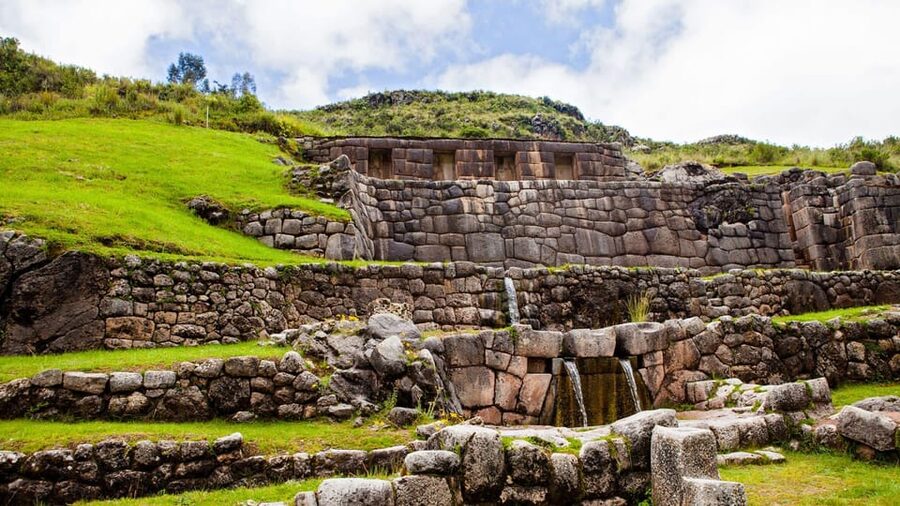
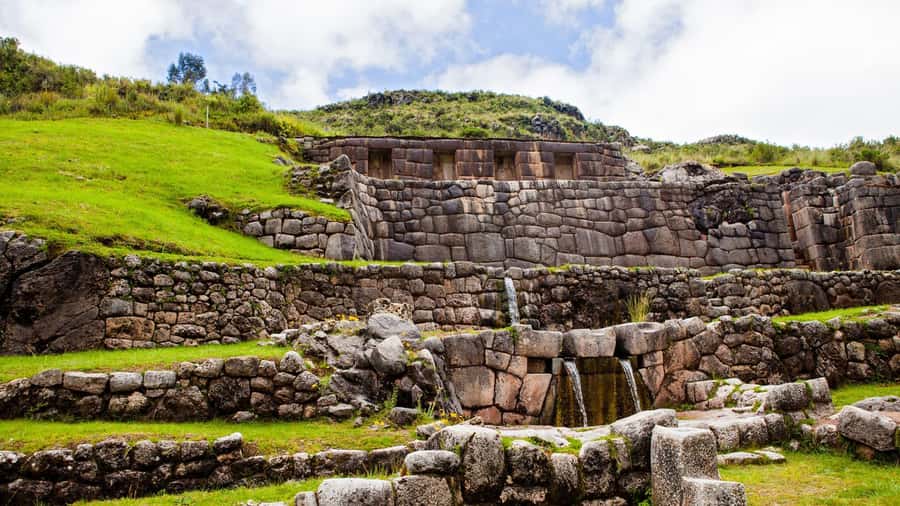
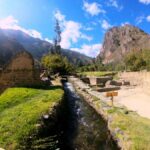
The final stop described is Tambomachay, also called the Inca Bath. The tour explains that the Incas worshiped water here, which gives you a way to interpret the features without turning the site into a guessing game.
Tambomachay is a great closer because it shifts the focus from fortifications and watchpoints to something more elemental. Water is life, and in many Andean cultures it’s also sacred. When a guide frames a site around worship of water, you’ll naturally look for how the channels and arrangement support that relationship.
As a tour ending, it also helps that Tambomachay is a different kind of visual experience. You’re not only facing steep fortress walls. You’re seeing a more flowing, functional style of site that makes the last hour feel like a change of pace.
Price and value: $20 tour cost plus the real entrance total
The headline price is $20 per person, and that’s for pickup and return transfer to the center of Cusco, minibus transportation, and a guide. That’s a fair deal for a half-day style rundown, especially if you don’t want to coordinate buses or worry about where you’re supposed to meet.
But here’s the value math you should do before you book. Entrance fees are not included:
- Cathedral of Cusco: 40 S/ (10.70 US$) for foreign people
- Qoricancha: 15 S/ (4 US$) per person
- 4 ruins: 70 S/ (18.80 US$) for foreign people
Add those together and your likely total for a foreign visitor becomes about $20 + $10.70 + $4 + $18.80 = $53.50, before any small extras. If you’re a budget traveler, that changes the conversation. The tour is still organized and guided, but you’re paying a second layer for entry tickets.
If you’re local, the ticket amounts listed are different, so your total will be lower. The guide and transport value stays similar either way, which is why it’s smart to evaluate the full cost up front, not just the advertised tour price.
Timing, order, and what can throw off your schedule
This is the part that can make or break your day, especially in a city where you want to fit other plans around the ruins tour.
The itinerary is described as moving from Plaza de Armas and Cathedral, to Qoricancha, then to Sacsayhuamán and the rest of the ruins, and finally back near the Plaza de Armas. However, one review experience flagged a real-world issue: on at least one Sunday, the order was changed, and the Cathedral and Plaza segment came last, so the tour felt too tight to complete everything.
You can’t control the day’s exact schedule once you arrive. But you can protect yourself with two simple habits:
- Ask your operator what order is used on your specific day
- If the Cathedral and Plaza area are your priority, plan a bit of buffer time afterward rather than stacking another must-do right away
Also remember the mismatch between “6 hours” on the calendar and “a four and a half hour tour” near the center. That’s not necessarily bad, it just means you should expect a fuller schedule for pickup and transfers.
What kind of guide experience you’ll want in Cusco
The tour includes a live guide and the listed languages are Spanish and English. That matters because sites like Qoricancha and Sacsayhuamán can feel like impressive stone from a distance unless someone translates the purpose behind what you’re seeing.
One review highlighted a guide described as a university professor who was very passionate about history, and even singled out someone called Doctor. That tells me the guide quality can be a major factor in your satisfaction, not just the route.
So if you care about interpretation, choose this kind of guided tour rather than a self-guided plan. When the guide explains why each site matters, you leave with a better mental map of how the Inca Empire used religion, defense, and water worship across the Cusco area.
Who this guided Cusco and four ruins tour is best for
This tour works best if you want an efficient overview of the Cusco area’s most famous Inca sites without having to coordinate transport yourself. The minibus and pickup make it friendly for first-time visitors and anyone who gets tired of planning.
It also suits you if you like a guided explanation. The itinerary is heavy on interpretation points: Inca-Spanish fusion at Qoricancha, architectural reasoning at Sacsayhuamán, shrine and watchtower roles at Qenqo and Puca Pucara, and the water-worship frame at Tambomachay.
If you’re the type who wants to linger for photos at each stop, you might find the flow a little brisk. In that case, consider saving extra time for one or two favorite sites after your tour, rather than trying to do “maximum everything” on one day.
Should you book this Cusco and 4 ruins guided tour?
Book it if you want a structured, guided circuit that hits Qoricancha, Sacsayhuamán, Qenqo, Puca Pucara, and Tambomachay in a single half-day style outing. The included transport and guide make it a practical choice, and the mix of religious centers, fortifications, and water worship gives you a fuller picture than just picking one ruin.
Skip or reconsider if your schedule is tight around the Cusco Cathedral and Plaza de Armas, because the day’s order can affect how much time you get. Also do the math on the entrance tickets. Once you add those, the total cost is closer to a midrange excursion than a budget walk-around.
If you decide to go, do one smart thing before you leave: confirm the visit order for your day with the operator, and plan a little breathing room afterward. That one step turns a potentially rushed itinerary into a smooth, memorable Cusco highlights day.
FAQ
How long is the tour?
The tour duration is listed as 6 hours.
Where does the tour start?
You get picked up at a meeting point and the tour begins with the Plaza de Armas area, where the Cusco Cathedral is located.
Does the tour include transportation?
Yes. The package includes minibus transportation and pickup plus return transfer to the center of Cusco.
What ruins and sites are included in the route?
The tour includes Cusco Cathedral (entry requires a separate ticket), Qoricancha (Temple of the Sun), Sacsayhuamán fortress, Qenqo shrine, Puca Pucara watchtower (Red Fortress), and Tambomachay (Inca Bath).
Is the entrance fee to Cusco Cathedral included?
No. Cathedral entrance is not included. It is listed at 40 S/ (10.70 US$) per foreign person and 12.50 S/ (3.40 US$) per local.
Is the entrance fee to Qoricancha included?
No. Qoricancha entrance is not included and is listed at 15 S/ (4 US$) per person.
Are entrance fees for the 4 ruins included?
No. Entrance to the 4 ruins is not included. It is listed at 70 S/ (18.80 US$) per foreign person and 40 S/ (10.70 US$) per local.
Is there a live guide, and what languages do they speak?
Yes, it includes a live tour guide. The languages listed are Spanish and English.
How long until you are dropped off in Cusco?
After the main touring portion described as about four and a half hours, you are left near the Plaza de Armas.
Is free cancellation available?
Yes. Free cancellation is offered up to 24 hours in advance for a full refund.
More Tours in Urubamba
- Machu Picchu: Group Guided Tour
★ 4.7 · 102 reviews - Machu Picchu: Tour Guide Service & Entrance Ticket Circuit-2
★ 4.6 · 90 reviews - Cusco: One Day Tour to Machu Picchu with Train Transfers
★ 4.8 · 28 reviews - Machu Picchu: historical and photographic guided tour
★ 4.9 · 27 reviews - Cusco: River Rafting Adventure Full Day | Adrenaline Tour
★ 4.9 · 23 reviews
More Tour Reviews in Urubamba
- Cusco:Sacred Valley Pisaq,Ollantaytambo,Chinchero with Lunch
★ 4.8 · 183 reviews - Machu Picchu: Group Guided Tour
★ 4.7 · 102 reviews - Machu Picchu: Tour Guide Service & Entrance Ticket Circuit-2
★ 4.6 · 90 reviews - From Cusco: Chinchero, Moray, Maras and Ollantaytambo
★ 4.5 · 83 reviews - from Urubamba & Ollantaytambo:Sacred Valley Full-Day Private
★ 4.9 · 31 reviews
More Leaving From Urubamba
- Cusco:Sacred Valley Pisaq,Ollantaytambo,Chinchero with Lunch
★ 4.8 · 183 reviews - From Cusco: Chinchero, Moray, Maras and Ollantaytambo
★ 4.5 · 83 reviews - Cusco: One Day Tour to Machu Picchu with Train Transfers
★ 4.8 · 28 reviews - Cusco: River Rafting Adventure Full Day | Adrenaline Tour
★ 4.9 · 23 reviews - Cusco in 3 days: city tour, Rainbow Mountain and Machupicchu
★ 4.9 · 7 reviews
Fresh in from Urubamba
Guided, compared.
 ★ 4.9Machu Picchu: Inca Trail 2-Day Overnight Guided TourFrom $585203 reviews
 ★ 5.0Full Day Private Guided Tour in Machu PicchuFrom $339115 reviews
 ★ 4.7Machu Picchu: Group Guided TourFrom $30102 reviews
 ★ 4.5Historical Guided City Tour with 4 Inca RuinsFrom $2399 reviews
 ★ 4.9Machu Picchu: Private Tour Guide ServiceFrom $9890 reviews
 ★ 4.6Machu Picchu: Tour Guide Service & Entrance Ticket Circuit-2From $16090 reviews
 ★ 4.5Puerto Maldonado: Sandoval Lake 4-Day, 3-Night Guided TourFrom $30090 reviews
 ★ 5.0Machu Picchu Private Archaeological and Historical Guided TourFrom $8086 reviews