
REVIEW · MACHU PICCHU & AGUAS CALIENTES TOURS
Salkantay 5-Day Trek To Machu Picchu
One wrong step, and the Andes remind you.
That’s what makes the Salkantay 5-day trek to Machu Picchu feel so real: you hike above snow peaks, then slide down into jungle warmth, and you finish with an early guided visit to Machu Picchu.
I especially like two things. First, the trek is built around small-group energy (max 16, average about 4), so you move at a human pace and you actually talk to your guide and fellow hikers. Second, the trip treats logistics like a craft, with camping gear organized, meals handled, and real time planned for key moments like Laguna de Humantay and the pass.
One consideration: this trek is not a walk in the park. The altitude can hit hard, the weather can swing fast, and your first night is the coldest campsite, so you need to show up ready.
Key things you’ll notice on this trek
Small group size (max 16, average about 4) means more attention and less crowding.
Altitude roller coaster goes from chilly 3,920m camps down toward the warmer 1,700m Santa Teresa area.
4,650m high pass day includes a serious climb, optional horse support for the pass, and big views.
Proper meal plan on-trail includes a vegetarian option if you request in advance.
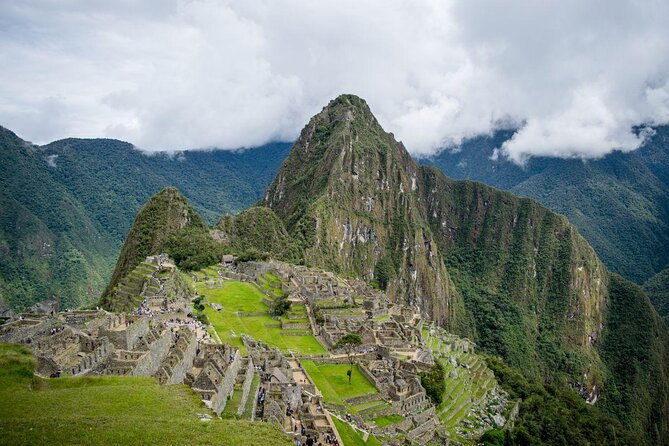
Early Machu Picchu entry with a guided walking tour, then time to explore on your own.
Gear support helps you move with horsemen and mules carrying cooking and camping equipment plus a limited load for you.
Other ways into the citadel, side by side
- Machu Picchu Day Trip from Cusco★ 4.5 · 1,644 reviews
- Machu Picchu: Full-Day Tour from Cusco with Optional Lunch★ 4.6 · 927 reviews
- Cusco: 4-Day Inca Trail to Machu Picchu with Accommodation★ 4.8 · 432 reviews
- From Cusco: 2-Day Trip to the Sacred Valley and Machu Picchu★ 4.6 · 265 reviews
Why this Salkantay route feels different than other ways to Machu Picchu
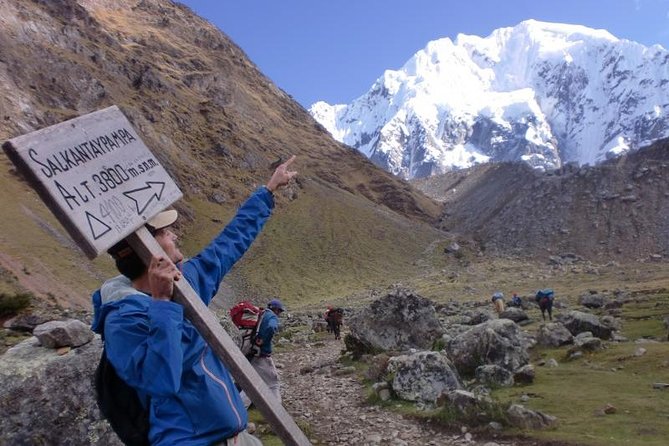
If you’ve done or planned the Inca Trail, you already know the core idea: you’re not just visiting a site, you’re building the day-to-day story that leads there. Salkantay keeps that spirit but swaps in a sharper mix of ecosystems. One day you’re staring at high Andean peaks, the next you’re surrounded by the lower, wetter jungle zone.
This route also gives you something practical: pacing that makes sense for most groups. You’re not constantly sprinting for the next landmark. You hike hard on key days, then you get rest time built in, especially around Santa Teresa and Aguas Calientes.
And the finale is designed for your comfort. Getting to Machu Picchu early matters, because you’re there while the mist is clearing. You get the guided walk, then you’re free to linger where you want.
Getting started fast: Cusco pickup, Mollepata stretch, and the altitude wake-up call
Your day typically begins early, with pickup between 5:00 and 6:00 am from Cusco. From there, you ride to Mollepata (2,900m) to stretch your legs, buy snacks, and settle in before the trek really begins.
What I like about this start is the handoff. You don’t just get dropped at a trailhead. You first get a checkpoint feeling in Challacancha, where equipment is double checked, then you walk up toward Soraypampa.
Still, this is an altitude trip from the moment you leave Cusco. Salkantay makes temperature and breathing changes part of the experience, not a background detail. Plan your energy accordingly, especially if you arrive in Peru only recently.
Day 1: Soraypampa, Laguna de Humantay, and the coldest campsite lesson
Day 1 sets the tone, and it does it in stages. You walk about 3 hours to Soraypampa (3,920m) after reaching Challacancha for final prep. Lunch here is timed for views, with snow-capped mountains as the backdrop.
Then comes Laguna de Humantay. The hike is about 1.5 hours each way, so it’s enough to feel like a real outing, but it still keeps the day from becoming a total burn. When conditions are right, you’ll get those crisp Andean scenes people plan for.
The best practical detail is what happens afterward: your first campsite is at 3,920m, and it’s described as the highest and coldest camp of the trip. That means night planning matters. Your sleep can be rough if you show up underdressed or without a proper cold-weather setup.
Day 2: The 4,650m Salkantay pass, optional horse support, then downhill to high jungle
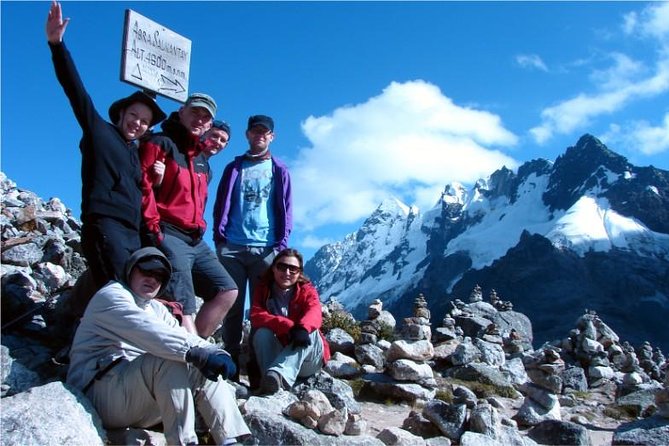
This is the day you train for. After breakfast around 6:00 am, you walk roughly 4 hours to the highest pass at 4,650m. The pass sits between two big names in the scenery, Salkantay (6,267m) and Humantay (5,900m), which is why the views can feel almost unreal.
Weather can play a role here, including the possibility of snow at the pass. That’s not something you can guess from just one sunny forecast, so be mentally ready for cold, wind, and changing conditions.
There’s also an option if you want to reduce the strain on the toughest part. Horse rental is available to reach the high pass for about 100 to 120 soles. If you’re worried about the top segment of the climb, this is the most straightforward way to manage it without abandoning the trek.
After the pass, the day continues with a 2-hour downhill section to lunch at Huayracpampa, then another 3-hour trek toward camp around 2,900m (Challhuay or Colcapampa). The total effort is listed around 22km and 9 to 10 hours.
The Salkantay route, run by other outfits
Day 3: Upper jungle hiking, waterfalls and river crossings, then Santa Teresa warm-up
Day 3 shifts the vibe. You leave camp after breakfast around 6:30 am, and you move through the upper jungle area, crossing the Santa Teresa River and smaller brooks. The hiking stays active, but the scenery changes from snow and stone to water, plants, and that thick, lower-altitude green.
This day is also built around variety. You’ll pass valleys with views of waterfalls, and you’ll see tropical fruits and plants. Lunch lands in La Playa (2,200m), then you travel by car to Santa Teresa (1,700m) for your campsite.
That drop to 1,700m matters. You’ll feel it in your body at the end of Day 3. It’s one of the reasons this trek doesn’t feel like one long punishment. It gives you a real recovery buffer before Machu Picchu day.
There’s an optional reward afterward too. You can visit hot springs in Santa Teresa for an extra cost (listed at 20 soles). If your legs are cooked, this can be the difference between arriving at Aguas Calientes stiff versus ready to explore.
Day 4: Hydroelectric station, Aguas Calientes reset, and a real food break
Day 4 is described as the last day on the trail, and it plays out like a transition. After breakfast around 8:00 am, you hike for about 3 hours along a path to the hydroelectric station (1,880m), where you get a box lunch.
From there, it’s about 3 more hours walking with a slight uphill feel to Aguas Calientes (2,010m). This part gives you a chance to reset mentally. You’re close to the finish, and you finally get time to recharge before Machu Picchu.
Even dinner is part of the payoff. You’ll eat at a local traditional restaurant, which is a nice change from campsite routines.
If you want to reduce walking here, there are optional transfers:
- A bus transfer from Santa Teresa to the Hydroelectric Station for about 10 soles
- A train transfer from Hydroelectric Station to Aguas Calientes for about 28 USD
These options can be useful if you’re managing injuries or if Day 2 and Day 3 were harder than expected.
Day 5: Early bus to Machu Picchu, guided tour first, optional peaks if you want more
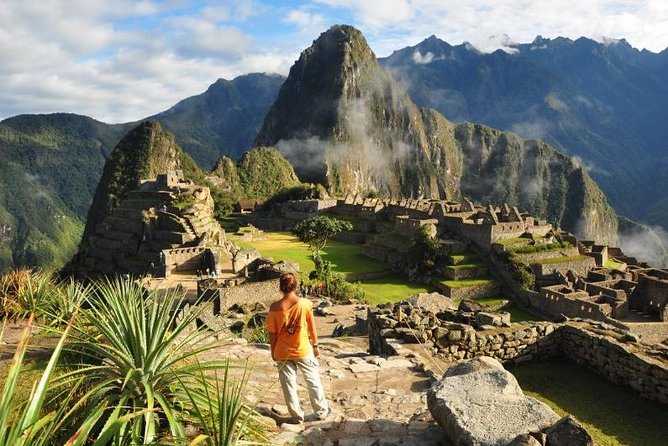
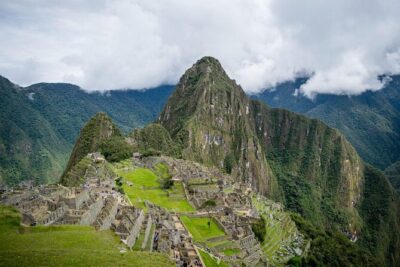
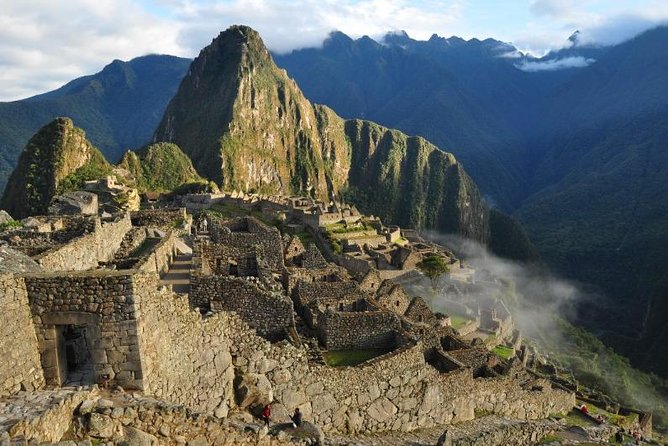
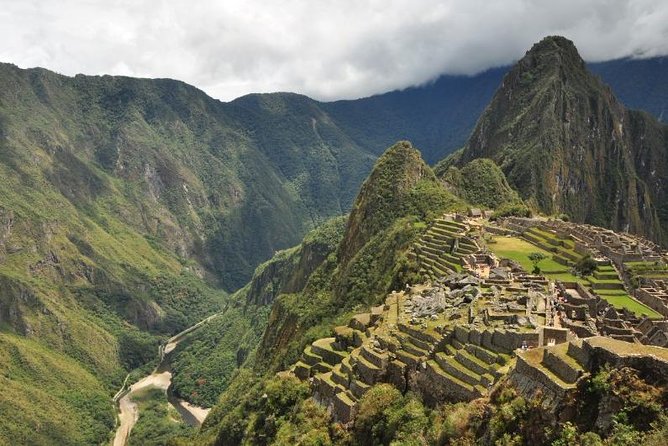
Machu Picchu day starts with discipline. The plan is to catch one of the first buses, leaving at 05:30 am, with a 25-minute ride to the site. The payoff is the light and the mist clearing, which makes the stone feel more alive.
You get a guided walking tour of about 2 hours. This is the part where a guide helps you connect what you see to what it means, without turning it into a lecture. After that, you can explore the ruins on your own.
If you want an extra challenge at altitude, there’s the optional climb to Huayna Picchu Peak, which is inside the archaeological site. It must be booked in advance at an extra cost, listed as at least 2 weeks ahead.
When you’re done, you take the bus back down to Aguas Calientes. Then you head back through Peru the efficient way: train to Ollantaytambo, then a bus to Cusco. You’ll be dropped off late in the day at Plaza San Francisco.
A small but important detail: you’ll have guides during the trek and the Machu Picchu tour, but the bus and train transfers are on your own.
Camps, tents, and the hotel night you actually look forward to
On the trek, you get camping accommodation, including a basic sleeping pad and a tent. The tent setup is shared for most solo travelers, and the rules are clearly defined: single travelers share a tent with another traveler, couples get a tent/room to themselves.
Day 4’s finish in Aguas Calientes is different. You stay 1 night in a 3-star hotel. That matters because your body finally gets to sleep in a real room environment, and you’re less likely to feel like you’re camping through the last night before Machu Picchu.
Also included is an emergency oxygen bottle. That doesn’t remove the need to be smart about altitude, but it’s the kind of safety detail that helps you relax.
Meals on the trail: what’s included, how vegetarian works, and the snack reality
Food is one of the biggest quality signals on multi-day treks, and this itinerary is set up so you are not constantly hunting for calories. You’ll have meals listed as 4 breakfasts, 4 lunches, 4 dinners, plus 3 snacks.
You also have more structure than a lot of budget treks. Breakfasts are described as warm and filling, with options like porridge, quinoa or oats, and eggs. Lunch and dinner involve soups and hearty second-course meals, with desserts included too.
Vegetarian is available, but you must request it ahead of time (at least 2 days in advance, according to the plan). If you don’t, you’re stuck hoping the chef can adjust. With a vegetarian request handled early, you’ll be eating normally during the trek.
Snack expectations: you can buy snacks during the first day stop at Mollepata, and the packing info suggests having extra cash for snacks and water, because prices can rise along the trail. That’s not a problem if you plan for it.
One practical note: Day 1 breakfast and Day 5 lunch are not included. You’ll want to account for those so you don’t feel surprised at meal time.
Fitness, altitude, and why being ready beats being brave
This is a demanding hike. The trip explicitly calls out physical readiness and the impact of altitude changes, including temperature shifts when you move from around 4,000 meters down toward 2,000 meters. That means you need more than leg strength.
For me, the key is how the itinerary distributes strain:
- Day 1 climbs to Soraypampa and adds Humantay on top
- Day 2 attacks the 4,650m pass and includes long hours
- Day 3 is active jungle hiking with river crossings
- Day 4 transitions you toward Aguas Calientes with steady movement
- Day 5 focuses on Machu Picchu time management with the early bus and guided walk
If you’re reasonably fit, this can feel like a tough but fair challenge. If you’re not, the pass day will punish you quickly.
If you’re unsure, use the optional horse support at the high pass as a tool, not a last resort.
Gear and packing: what you should bring for cold nights and sudden weather changes
Cold is part of this trek, especially on Day 1 at 3,920m. The suggested packing list includes practical items you should treat like essentials:
- trekking boots and warm socks
- thermals, sweater, and warm layers
- hat, gloves, sun hat, and sunglasses
- rain pants and a rain poncho
- hiking poles
- sunscreen and sunblock
- a flashlight or torch
- a water bottle
- a personal first aid kit
- waterproof bags for camera protection
Two important reminders:
- Sleeping bag is not included, so plan for it before you go.
- There’s limited to no electricity during the trek, so charge your devices early and bring extra batteries.
Also, pack a small mindset for temperature changes. One hour you’re climbing in cold air, and later you’re in a warmer zone. Layers make that difference between enjoying the day and constantly feeling chilled.
Price and value: is $797 fair for what you get?
At $797 per person, you’re paying for a full bundle: transfers, guide services, entrance, meals, camping, and the Machu Picchu guided tour, plus the ride back to Cusco.
Is it cheap? No. But it doesn’t look like an inflated price for what’s included. You get:
- hotel pickup and multiple transport legs
- a local guide on the trek and a guide for Machu Picchu
- 3 nights of camping plus 1 hotel night at Aguas Calientes
- meals each day on the trail (with vegetarian option)
- entrance ticket included for Machu Picchu
- small-group organization, capped at 16
Where you should watch value is in what’s not included and what you might add:
- sleeping bag
- optional horse rental at the pass
- hot springs in Santa Teresa
- optional bus or train shortcuts near Day 4
- optional Huayna Picchu climb and other Machu Picchu mountain options
And there’s one pricing-related reality to take seriously: the trip is non-refundable and can’t be changed for any reason if you cancel. That makes planning and confidence more important than with a flexible ticket.
Who this trek suits best (and who should think twice)
This is a great fit if you want a challenging trek with guided support, and you want the full Machu Picchu experience without having to organize daily camp logistics yourself. It’s also a strong choice if you like variety, not just one type of scenery.
I’d also say it works well for people who appreciate boundaries. The plan includes gear handling for cooking and camp equipment, meal structure, and a clear pass day. That gives you fewer surprises.
Think twice if:
- you’re not comfortable with altitude or long hiking hours
- you hate cold nights, since Day 1 is the coldest camp
- you want total freedom to design your own schedule, because the route is set and guided
The minimum age is 7 years, so it’s not strictly adult-only. But it’s still described as demanding, so family travelers should judge readiness carefully.
Should you book this Salkantay 5-day trek to Machu Picchu?
If your goal is a guided, small-group trek that hits the big milestones, I’d book it. The early Machu Picchu start, the organized camping and meals, and the shift from high Andean pass to jungle warmth are a strong combo. And the trek feels built for people who want both challenge and support.
Before you commit, do three things:
- Be honest about your fitness for the 4,650m pass day.
- Pack for cold and rain, especially for the first campsite.
- Budget a little extra for options like hot springs, Huayna Picchu, and any day-4 shortcut if you need it.
If that sounds like your kind of adventure, this trek is a solid, value-forward way to reach Machu Picchu.
FAQ
What time does the trek start in Cusco?
Pickup is offered between 5:00 and 6:00 am, and the start time is listed as 5:00 am.
What is the highest point on the trek?
The highest pass on the trek is 4,650 meters.
Is camping included, and will I have a tent?
Yes. Camping accommodation is included during the trek, and it includes a basic sleeping pad and a tent.
Is there an option for vegetarian meals?
Yes. Vegetarian meals are available if you request in advance.
Where do we stay on the night before Machu Picchu?
You stay 1 night in Aguas Calientes in a 3-star hotel.
How do we get to Machu Picchu from Aguas Calientes?
The itinerary includes a round-trip tourist bus between Aguas Calientes and Machu Picchu.
Are hot springs or Huayna Picchu included?
Hot springs in Santa Teresa are optional (extra cost). Huayna Picchu is also optional and must be booked in advance at an extra cost.
Is this tour refundable if plans change?
No. The experience is non-refundable and cannot be changed for any reason.
More Tour Reviews in Cusco
- Cusco: Humantay Lake Tour with Breakfast and Buffet Lunch
★ 4.9 · 2,976 reviews - From Cusco: Moray, Maras Salt Mines & Chinchero Weavers Tour
★ 4.8 · 1,925 reviews - From Cusco: Full-Day Group Tour of Machu Picchu
★ 4.7 · 1,767 reviews - Machu Picchu Day Trip from Cusco
★ 4.5 · 1,644 reviews - Cusco: Half-Day City Tour with Sacsayhuaman and Q’enco
★ 4.6 · 1,129 reviews
Salkantay, Other Operators
- Salkantay Trek Challenge – 3 Days / 2 Nights
★ 5.0 · 101 reviews - Small Group 5 Days Salkantay and Machu Picchu by Llactapata Tour
★ 5.0 · 88 reviews - Machu Picchu: 5-Day Salkantay Trek with Panoramic Train
★ 5.0 · 79 reviews - Salkantay Trek 4 Days to Machu Picchu by Glamping Sky Lodge Dome
★ 5.0 · 68 reviews - Salkantay Trek to Machu Picchu in 4 days
★ 4.5 · 50 reviews
Machu Picchu, Three More Ways
- From Cusco: Full-Day Group Tour of Machu Picchu
★ 4.7 · 1,767 reviews - Machu Picchu Day Trip from Cusco
★ 4.5 · 1,644 reviews - Machu Picchu: Full-Day Tour from Cusco with Optional Lunch
★ 4.6 · 927 reviews - Cusco: 4-Day Inca Trail to Machu Picchu with Accommodation
★ 4.8 · 432 reviews - From Cusco: 2-Day Trip to the Sacred Valley and Machu Picchu
★ 4.6 · 265 reviews
Fresh in from Cusco
Machu Picchu & Aguas Calientes Tours, compared.
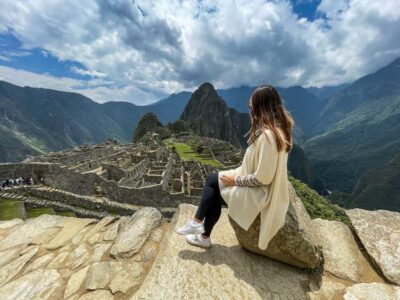 ★ 4.7Full-Day Group Tour of Machu PicchuFrom $3211,767 reviews
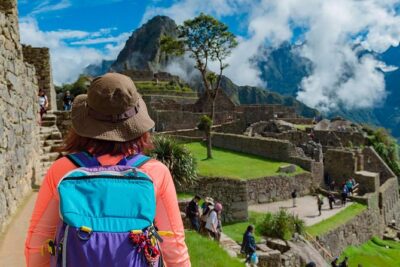 ★ 4.5Machu Picchu Day Trip from CuscoFrom $3361,644 reviews
 ★ 4.6Machu Picchu: Full-Day Tour from Cusco with Optional LunchFrom $283927 reviews
 ★ 4.84-Day Inca Trail to Machu Picchu with AccommodationFrom $470432 reviews
 ★ 4.62-Day Trip to the Sacred Valley and Machu PicchuFrom $370265 reviews
 ★ 4.9Machu Picchu 2-Day Inca Trail with Panoramic TrainFrom $582260 reviews
 ★ 4.22-Day Inca Trail to Machu PicchuFrom $290244 reviews
 ★ 4.9Machu Picchu: Inca Trail 2-Day Overnight Guided TourFrom $585203 reviews
Browse the lists this tour appears in