
REVIEW · MACHU PICCHU & AGUAS CALIENTES TOURS
Salkantay Trek to Machu Picchu in 4 days
Salkantay is tough, then it rewards you. This 4-day trek from Cusco strings together snow-peak views and guided Machu Picchu time, with a big photo stop at Humantay Lagoon and a foresty walk that keeps the air changing by the day. I like that the trip includes an English-speaking guide and all-inclusive meals, so you spend less energy on logistics and more on hiking.
I’d pay close attention to health-and-safety details. Some past guests said the first aid kit and oxygen balloon did not match what was described, and they had to pay for extra help after getting sick on the trek. If you book, ask the operator to confirm those items and have your own altitude plan ready.
Key points to know before you choose this trek
- Day 2 reaches the Salkantay Pass at 4,630 m, after a long ascent, so it is the physical crux of the trip
- Humantay Lagoon sits at 4,200 m, reached by a shorter hike with time for photos and calm views
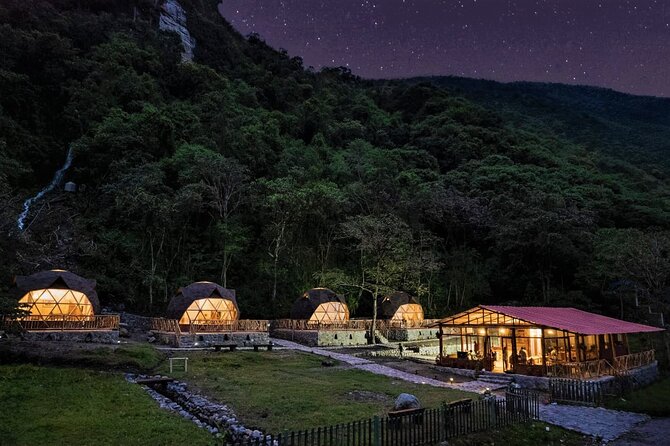
- You sleep in domes at Sahuayaco, not just tents, plus there is tea time with warm drinks and snacks
- Horses carry up to 7 kg (15 lb), so you hike with a smaller personal backpack and water
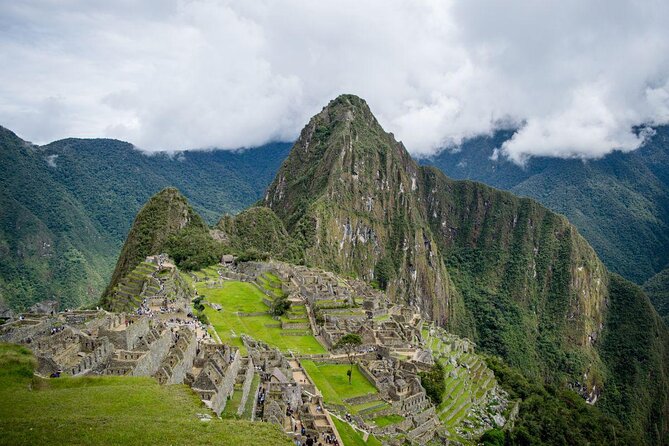
- Machu Picchu is guided for about 2 hours, then you get free time for photos and exploring
- Group size is capped at 10, which often makes it easier to move at a steady pace
Other ways into the citadel, side by side
- Machu Picchu Day Trip from Cusco★ 4.5 · 1,644 reviews
- Machu Picchu: Full-Day Tour from Cusco with Optional Lunch★ 4.6 · 927 reviews
- Cusco: 4-Day Inca Trail to Machu Picchu with Accommodation★ 4.8 · 432 reviews
- From Cusco: 2-Day Trip to the Sacred Valley and Machu Picchu★ 4.6 · 265 reviews
Why this 4-day Salkantay route works for most people
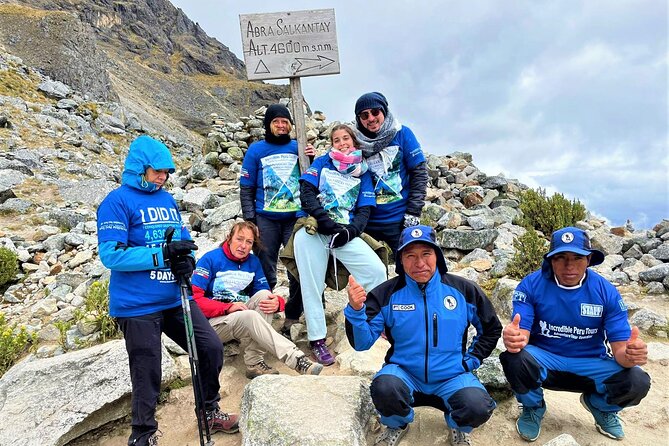
The Salkantay Trek is popular for a reason: it is one of the best ways to experience the Andes as a whole system, from cold mountain passes to warmer cloud forest. In four days, you get a mix of high views, glacier-facing valleys, and then a gradual transition toward the Machu Picchu region.
The route also avoids a “one-note” trek. You start with classic high-altitude hiking near Challacancha, you add Humantay Lagoon as your big day-one moment, then you cross the toughest climb on Day 2. After that, the walking becomes greener, more shaded, and more forgiving, before you finish with the Machu Picchu sunrise-to-citadel routine.
Day 1 from Cusco to Soraypampa: early pickup and first mountain fuel
You begin in Cusco with a very early 5:00 am hotel pickup in private transport. Your tour guide and cook handle the check-in rhythm, and you will want your original passport with you because it is required at control points along the way. This is also where the tone gets set: quick, organized, and focused on getting you moving before the day heats up.
The drive stops in Mollepata, where you get about an hour on the ground and a first breakfast at a local restaurant. Then it is back on the road for roughly 30 minutes to Challacancha, the start area at about 3,600 m. From there, you meet the muleteer and horses, and your kitchen and camp supplies go on the animals so you can keep your load smaller.
The walk begins around 9:30 am and runs about 10 km (roughly 3 hours) toward Soraypampa. The path is described as stone ballast with a cool, clear water channel running alongside it, which matters more than you might think, because that kind of steady water access helps the camp and creates a calmer rhythm on your first day.
Midday brings lunch around the Soraypampa area, then you get your second big day-one moment in the afternoon at Humantay Lagoon. After the lagoon hike, the day wraps back at camp with tea time, including hot drinks plus popcorn and cookies. Dinner is served later, and there is even optional stargazing time if the sky is clear.
What I like about Day 1: the pacing is balanced. It starts early, but it does not throw you straight into the hardest altitude. Soraypampa is a smart staging base for what comes next.
What to watch: the first day is still a real hike at altitude. Even if you feel strong, you are moving at roughly 3,600 m, so take it easy in the first hour and save energy.
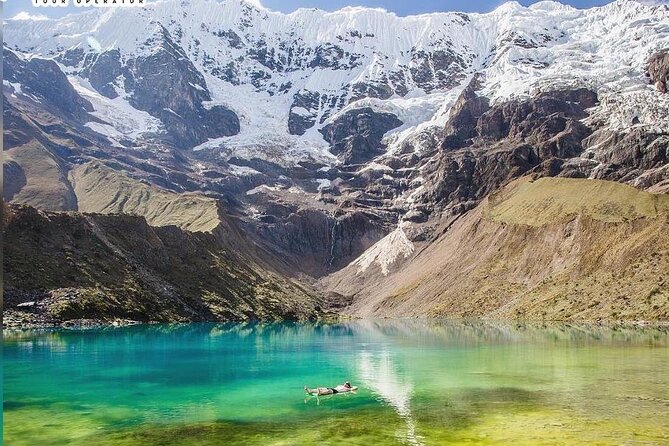
Humantay Lagoon at 4,200 m: the “wow” stop that isn’t too long
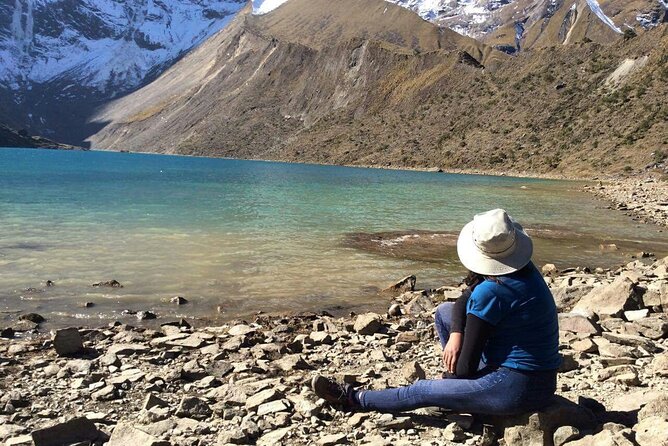
Humantay Lagoon is reached after a rest, with a hike of about 1 hour 30 minutes. The route goes up to about 4,200 m, and the payoff is time to enjoy the lagoon and take photos without feeling rushed.
This matters because altitude views can look different depending on light and cloud cover. You want enough time on-site to wait for a clearer moment, not just sprint in and out. The schedule gives you that breathing room, which is a big part of why this stop is so memorable.
Day 2 over the Salkantay Pass: when altitude becomes your main opponent
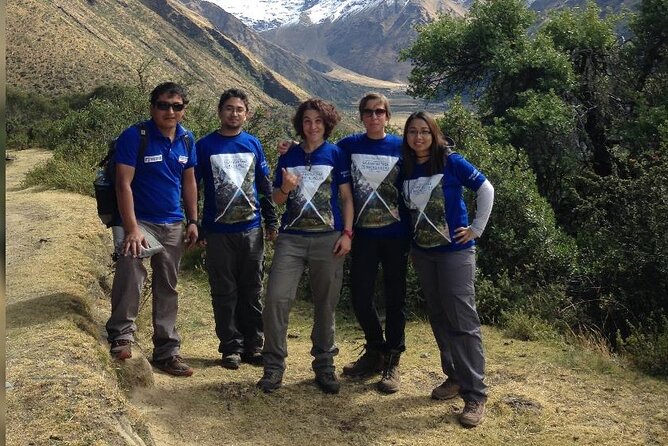
Day 2 starts early, with coca tea around 5:00 am and breakfast before the main climb. This is the hardest day of the trek, and the numbers show why: you hike toward the highest point, about 7 km away, with a steep push that takes around 3 hours.
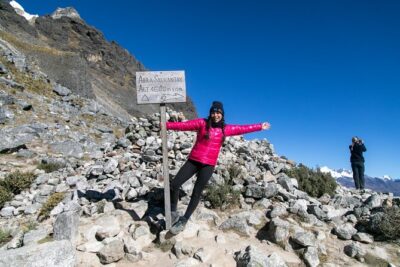
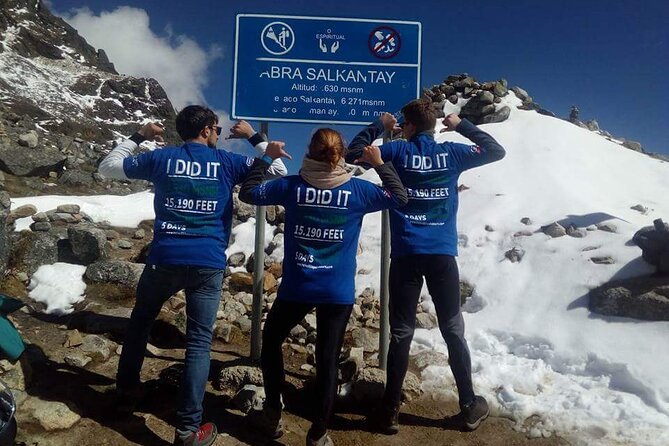
The climb starts with a gradual slope along the Salkantay Valley for about an hour, then you continue up through a rocky stretch. You reach Pampa Salkantay at about 4,200 m for a short break with panoramic views. Then you continue another 2 hours up through a rocky valley until you reach the Salkantay Pass at about 4,630 m.
At the top, you get time to rest and absorb the mountain views, including perspectives on Salkantay and Humantay peaks. The route description also notes that below the pass you can see cloud forest conditions in the lower valley, so when the weather cooperates, you get a clear sense of how dramatic the “climate change” is across the trail.
After the pass, the trek shifts into descent. You go toward Huayraqmachai for lunch around 1:30 pm, then in the afternoon you enter the High Forest, also called cloud forest. This part tends to feel warmer and more plant-filled, which can make you feel like the trek is finally easing up.
You reach Colpapampa around 4:30 pm, and then a vehicle transfers you about an hour toward the Sahuayaco area. Your second night is at an eco-lodge in dome accommodations, and the day closes with tea time, hot chocolate, coffee, cookies, popcorn, and dinner.
If you want to nail Day 2: pace matters more than speed. Keep your effort smooth in the first hour, then adjust based on breathing. At 4,630 m, even strong hikers can feel slower than expected.
Possible drawback: if you are prone to altitude sickness, this is the day to respect. One of the big warnings from past guests involved health issues and a mismatch around first aid support, so treat altitude safety as your top planning priority.
The Salkantay route, run by other outfits
Day 3: coffee farms, Hydroelectric walking, and the Intihuatana stop
Day 3 shifts from peak altitude work into a more varied day. You wake up around 7:00 am, breakfast at 8:00 am, then you walk around the lodge area and visit local plantations. The route includes bananas, avocados, oranges, and medicinal plants, plus coffee plantations that support livelihoods in the region.
There is also a chance to visit a local coffee farm and taste freshly prepared coffee. The point here is not just sampling a drink, it is seeing how the landscape supports people in the warmer, lower elevations around the trek. It adds meaning to the trek beyond the scenery.
Around 11:00 am you return to the lodge for relaxation, then travel to the Hydroelectric Power Plant, arriving about 2:30 pm. From there, you start walking toward Aguas Calientes. The first part includes a slight climb, about 15 minutes, then the route becomes flatter and follows train tracks near the Urubamba River.
You also pass the archaeological site called Intihuatana, an Inca-era sundial carved into a natural rock. Sacred mountains like Huayna Picchu and Machu Picchu may appear from this stretch, and the walking continues through cloud-forest conditions with lots of plant variety.
After about 3 hours, you reach Aguas Calientes around 5:30 pm. You sleep in a comfortable hotel there, and dinner is included at a tourist restaurant. Your guide also gives key info for the next morning, which is smart because Machu Picchu day is its own mini-adventure.
What I like about Day 3: it connects the trekking day to the Machu Picchu day without rushing. You get time to settle in Aguas Calientes and get your bearings for the early morning bus.
Day 4: Aguas Calientes early bus, guided Machu Picchu, and the return to Cusco
On Day 4, you leave the hotel around 5:30 am after breakfast. You walk to the bus station, then take a tourist bus up the zigzag road for about 30 minutes to Machu Picchu Sanctuary. Arrival is around 6:30 am, right when the site is at its most magical for first-time visits.
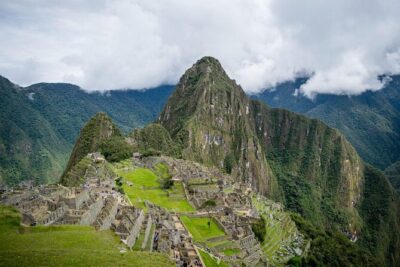
The Machu Picchu guided tour lasts about 2 hours with a professional guide. Expect explanations of the citadel’s history and layout, plus help finding the key spots that make the site feel so intentional. After the tour, you get free time to take photos, walk the grounds, and explore on your own. There is also a possibility to climb Huayna Picchu if availability allows.
In the afternoon, you take the tourist bus down. Later, you reach Ollantaytambo on the train around 7:40 pm, then your group gets transferred by tourist bus back to Cusco. You typically arrive around 10:00 pm, with drop-offs at hotels in Cusco or potentially within the Sacred Valley.
Practical tip: plan on early nights in Aguas Calientes. You are leaving at 5:30 am and the whole day is timing-sensitive.
Lodging and meals: where the value actually shows up
This trip is built on comfort for a trek of this length. Meals are “all inclusive” across the days: 4 breakfasts, 4 lunches, and 3 dinners. You also get vegetarian, vegan, and special diet meals if you request them.
The biggest win is that you are not scrambling for food during the most exhausting parts of the day. Breakfast happens before the hike starts, lunch appears at logical points on the route, and dinner lands after you settle in.
Lodging is also a step above basic camping in two of the nights. Night one is in the Soraypampa area at a cabin-style eco-lodge setting. Night two is at dome accommodations in the Sahuayaco area, described as luxury wood and glass domes. Night three is a private bathroom room at a hotel in Aguas Calientes.
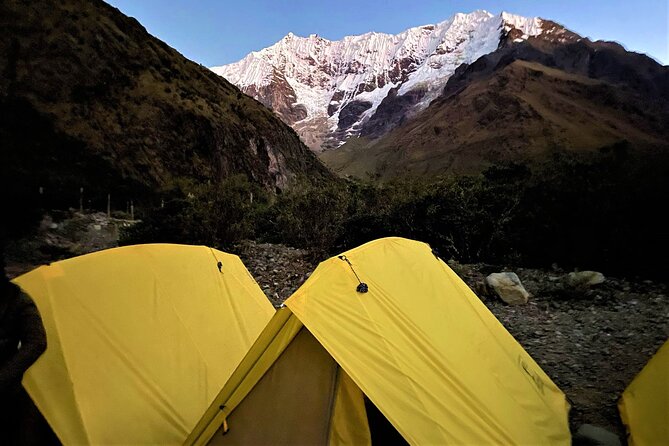
And yes, there is camp infrastructure too: a dining tent with field tables, portable chairs, and camp lamps. It sounds minor, but it makes a real difference when you are wet, cold, and hungry.
Price and logistics: does $590 feel fair?
At $590 per person, you are not paying just for walking. You are paying for a chain of included elements that would cost a lot if you tried to stitch together on your own: professional guide, cook and kitchen team, entrance tickets for the Salkantay route and Humantay Lagoon, admission and guided tour at Machu Picchu, plus meals and lodging.
You also get transport support at key points. There is a private transport transfer at the start, a vehicle segment around Colpapampa to the Sahuayaco dome lodge, and transport from the domes area to the Hydroelectric Power Plant. On the Machu Picchu side, you get hop-on, hop-off bus tickets between Aguas Calientes and Machu Picchu, and the train ticket back to Ollantaytambo on the final day.
When it comes to value, this is the kind of trek where “included” means less stress. You are paying to reduce decision-making when you are tired, cold, and at altitude. That said, cost only feels fair if the safety essentials are actually delivered.
Guide quality: the difference between good and unforgettable
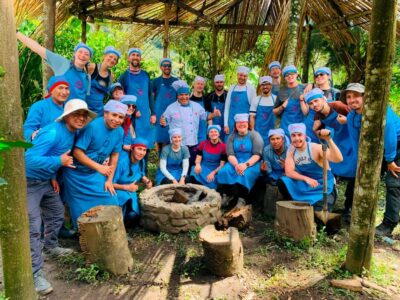
The human piece matters here. In the feedback I saw, guides like Herbert were described as genuinely great, and Gilber was praised for being very knowledgeable with long conversations that added context beyond the routine talk. Another guide named Rene was highlighted for making a challenging day doable for all participants.
That is not fluff. On Day 2, you are not only fighting altitude, you are also fighting panic thoughts. A guide who reads the group, adjusts pace, and explains what to expect can turn the hardest day into a controlled effort.
One caution from mixed feedback: some people reported safety gear expectations were not met, including first aid kit and emergency oxygen balloon items. Even though emergency support is listed as part of the package, I would still confirm it before you commit, and I would not assume you are fully protected from altitude risk.
Altitude reality check and packing that keeps you comfortable
This trek climbs high fast. You start around 3,600 m, go to Humantay Lagoon at 4,200 m, and reach the Salkantay Pass at 4,630 m. Then you descend into cloud-forest areas and drop to Aguas Calientes around 2,000 m.
That altitude swing is the main reason people feel wiped out, even when they are fit. If you have a moderate physical fitness level, this route can work, but you should still plan for the hardest day on Day 2 and the early start on multiple mornings.
What you should know is already built into the trip design: horses carry up to 7 kg, so your job is mainly to carry a small backpack and water. The tour also provides all necessary equipment you will use, and there is an emergency system described as a first aid kit plus oxygen balloon carried by the guide.
For your personal packing, the tour notes that personal items like your clothes and shoes are not included. That is where you should spend attention. Warm layers and rain protection help, because you can go from freezing mountain air to warmer cloud forest and back.
Who should book this Salkantay trek (and who should be cautious)
This fits best if you want a classic Andes route that ends with a guided Machu Picchu visit. You get a small group (max 10), structured days, and a clear progression from high pass to forest to citadel.
It also suits you if you like guided interpretation. The Machu Picchu day is guided for about 2 hours, and the rest of the experience includes a lot of scheduled moments, from Humantay Lagoon to Intihuatana.
You should be cautious if you are very sensitive to altitude or if you have a medical condition that could be affected by high elevation. Based on mixed feedback, I would also confirm that the emergency support gear described is actually present with your guide. If it is not, you should have a clear plan for what happens if someone gets sick.
Should you book? My take
If you want the full Salkantay-to-Machu Picchu experience in just 4 days, with meals, lodging, guides, and key transport included, this can be a strong value at $590. The mix of Humantay Lagoon, the Salkantay Pass day, dome lodging, and a guided Machu Picchu citadel makes the itinerary feel like a complete story instead of a checklist.
I would book with one mindset: treat Day 2 altitude seriously. Ask the operator to confirm emergency oxygen and first aid essentials before you go, and plan to move steadily rather than fast. If that box checks out, you are very likely to finish with a lot more than photos. You’ll finish with a sense of how dramatic the Andes can be in just four days.
FAQ
What time does the tour pickup start in Cusco?
Pickup starts at 5:00 am. The tour begins with private transport from your hotel in Cusco, and you should carry your original passport.
Where do you start the trek, and what elevation is it?
The walking starts at Challacancha, around 3,600 m above sea level. That is the starting point where you meet the muleteer and horses.
Is Humantay Lagoon included, and how long is the hike there?
Yes, the Humantay Lagoon visit is included. The hike is about 1 hour 30 minutes to reach the lagoon at around 4,200 m, with time for photos.
What is the hardest day of the trek?
Day 2 is the hardest day. It includes the ascent to the Salkantay Pass at 4,630 m, described as pure ascent after an early morning start.
Are meals included during the trek?
Yes. Meals are included as 4 breakfasts, 4 lunches, and 3 dinners. Vegetarian, vegan, and special diet options are available if you request them.
Where do you sleep during the trek?
You sleep three nights: the first night in Soraypampa at Cabaña Andina (Eco-Lodge Mamá Andrea), the second night at the Eco Lodge Majestic Sky Domes in Sahuayaco, and the third night in a hotel in Aguas Calientes with a private bathroom.
Do you get a guided visit at Machu Picchu?
Yes. You get a guided tour of the Inca Citadel of Machu Picchu that lasts about 2 hours, followed by free time to explore and take photos.
How do you return to Cusco after Machu Picchu?
After Machu Picchu, you return by bus down to Aguas Calientes, then take the expedition tourist train to Ollantaytambo. From Ollantaytambo, a tourist bus brings you back to Cusco.
More Tour Reviews in Cusco
- Cusco: Humantay Lake Tour with Breakfast and Buffet Lunch
★ 4.9 · 2,976 reviews - From Cusco: Moray, Maras Salt Mines & Chinchero Weavers Tour
★ 4.8 · 1,925 reviews - From Cusco: Full-Day Group Tour of Machu Picchu
★ 4.7 · 1,767 reviews - Machu Picchu Day Trip from Cusco
★ 4.5 · 1,644 reviews - Cusco: Half-Day City Tour with Sacsayhuaman and Q’enco
★ 4.6 · 1,129 reviews
Salkantay, Other Operators
- Salkantay Trek Challenge – 3 Days / 2 Nights
★ 5.0 · 101 reviews - Small Group 5 Days Salkantay and Machu Picchu by Llactapata Tour
★ 5.0 · 88 reviews - Machu Picchu: 5-Day Salkantay Trek with Panoramic Train
★ 5.0 · 79 reviews - Salkantay Trek 4 Days to Machu Picchu by Glamping Sky Lodge Dome
★ 5.0 · 68 reviews - Salkantay Trek Standard 5D/4N
★ 5.0 · 48 reviews
Machu Picchu, Three More Ways
- From Cusco: Full-Day Group Tour of Machu Picchu
★ 4.7 · 1,767 reviews - Machu Picchu Day Trip from Cusco
★ 4.5 · 1,644 reviews - Machu Picchu: Full-Day Tour from Cusco with Optional Lunch
★ 4.6 · 927 reviews - Cusco: 4-Day Inca Trail to Machu Picchu with Accommodation
★ 4.8 · 432 reviews - From Cusco: 2-Day Trip to the Sacred Valley and Machu Picchu
★ 4.6 · 265 reviews
Fresh in from Cusco

Machu Picchu & Aguas Calientes Tours, compared.
 ★ 4.7Full-Day Group Tour of Machu PicchuFrom $3211,767 reviews
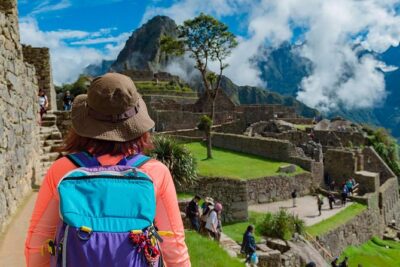 ★ 4.5Machu Picchu Day Trip from CuscoFrom $3361,644 reviews
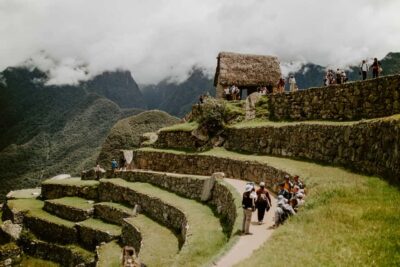 ★ 4.6Machu Picchu: Full-Day Tour from Cusco with Optional LunchFrom $283927 reviews
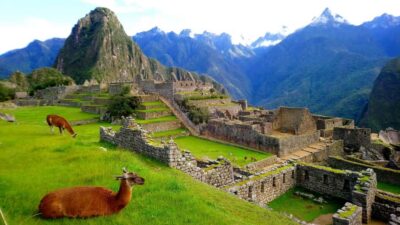 ★ 4.84-Day Inca Trail to Machu Picchu with AccommodationFrom $470432 reviews
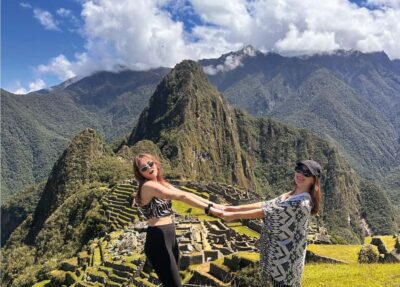 ★ 4.62-Day Trip to the Sacred Valley and Machu PicchuFrom $370265 reviews
 ★ 4.9Machu Picchu 2-Day Inca Trail with Panoramic TrainFrom $582260 reviews
 ★ 4.22-Day Inca Trail to Machu PicchuFrom $290244 reviews
 ★ 4.9Machu Picchu: Inca Trail 2-Day Overnight Guided TourFrom $585203 reviews
Browse the lists this tour appears in