
REVIEW · CITY TOURS
Cusco Half Day City Tour: Four Ruins
Cusco gets an Inca makeover in four stops. You will see how the Incas built for power, worship, and everyday life, all within a tight day plan that starts at 10:00 am and keeps moving in a good, manageable rhythm. What I love is that the ruins tell different stories back to back: fortress walls, carved temples, a red-toned complex, and a spring-fed “Bath of the Inca.”
Two specific things make this tour work well. First, the small group size (max 15) keeps the vibe calmer, so you can actually look closely at the stones. Second, the bilingual guide format matters, and I’ve seen guides named Edith and Freddy handle the English side clearly, with helpful explanations in both languages.
One thing to consider: the time can feel tight. Some people report a slightly rushed pace, and others note altitude and stairs can make the short walks breathless if you have not acclimated.
Quick reasons this tour is such an easy win
- Four different Inca sites in one loop, so you spend less time deciding what to prioritize
- Max 15 people means easier photo stops and less crowd pressure
- Bilingual English and Spanish guidance helps the meaning of each ruin land fast
- Real architecture details: zigzag stone walls, a monolith temple, and terraced waterworks
- Comfortable transport from Cusco keeps the day efficient
- A natural-spring stop at Tambomachay offers a quieter finish after busier ruins
More that leaves from a Cusco hotel door
- Cusco: Humantay Lake Tour with Breakfast and Buffet Lunch★ 4.9 · 2,976 reviews
- From Cusco: Moray, Maras Salt Mines & Chinchero Weavers Tour★ 4.8 · 1,925 reviews
- From Cusco: Full-Day Group Tour of Machu Picchu★ 4.7 · 1,767 reviews
- Machu Picchu Day Trip from Cusco★ 4.5 · 1,644 reviews
The big idea: why these four ruins fit together
This tour is built around a simple but smart concept: you do not just “tick off” ruins, you see different functions of Inca life. At Sacsayhuaman, the big question is power and defense. At Q’enqo, it shifts toward ritual and mystery. At Puka Pucara, you get a sense of movement, water use, and daily organization. Then Tambomachay slows everything down with nonstop water trickling through terraces.
For you, the value is time. Cusco can be intense, especially if you are also planning a Sacred Valley day or a Machu Picchu visit. This half-day style route helps you get oriented with Inca engineering and religion without committing to a full day on the road.
Also, the group limit matters more than you might expect. When there are fewer people, your guide can pause longer at the spots that need explaining, and you can stand where you want for photos without feeling like you are in a conveyor belt.
Price, timing, and what you should budget before you arrive
The tour costs $45 per person and runs about 6 hours. The start time is 10:00 am, and it returns to the same meeting point. In practice, you should treat it as flexible, not rigid. Some departures can run late, and a few guests reported the tour felt closer to 4 hours than 6.
Transport is included, and you get a bilingual guide in English and Spanish. That is a real cost saver versus trying to coordinate taxis between sites and hiring separate guides for each stop.
Entrance fees are not included. The information provided lists Qorikancha entry at PEN 20.00 per person and entrance to sites at PEN 70.00 per person. Since your route focuses on Sacsayhuaman, Q’enqo, Puka Pucara, and Tambomachay, plan on paying the site entry fee at minimum. If any extra temple ticket shows up on the day, you will be glad you budgeted a little buffer.
My practical tip: carry cash or have a plan for payment in soles, and bring a small snack and water. Even when the van ride is short between Cusco and each ruin, your stamina on the ground is what decides how much you enjoy the views.
Stop 1: Sacsayhuaman, Inca fortress walls and Cusco’s sacred skyline
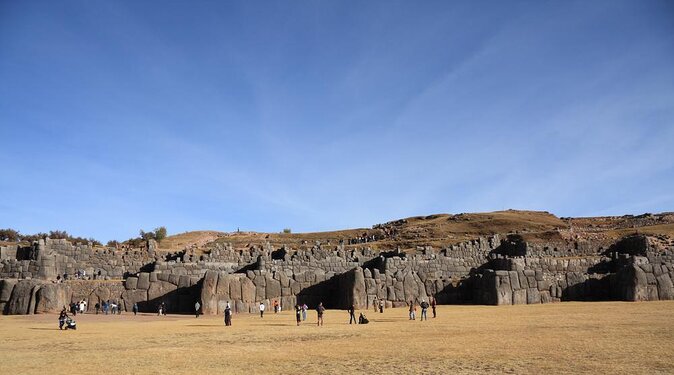
Sacsayhuaman sits just outside Cusco and is one of the most visually impressive Inca complexes nearby. The name comes from Quechua and roughly points to a meaning tied to hawks. You may hear it described as fortress-like, but the site also has ceremonial possibilities, which is very typical with Inca architecture.
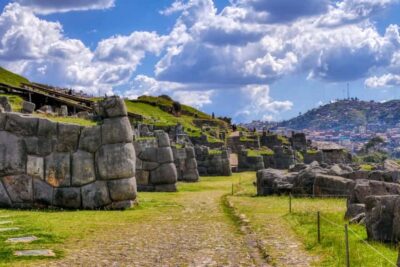
What you should look for first is the stonework. The main wall uses a zigzag pattern with giant stones reported up to 5 meters high and about 2.5 meters wide, weighing enormous amounts. That is not decorative. It is engineering meant to last and intimidate, and it lines up with why Spaniards later used the word fortress to describe it.
The key moment for most people is the view. Sacsayhuaman gives you a clear look at major Andean peaks, including Ausangate, Pachatusán, and Cinca. Those summits were sacred to the Incas, so you are not just seeing scenery. You are seeing part of a spiritual map.
Inca chroniclers even credited Sacsayhuaman as one of the greatest architectural works during the Inca apogee. Whether you go deep into the scholarship or not, the walls still feel monumental in your hands, eyes, and camera frames.
Time-wise, plan on about 1 hour here. The main “downside” is that you may have short walks and changes in elevation. If altitude is still new to you, take your time on the stone paths. One review noted the guide did not push people faster than they could comfortably go, which is exactly what you want.
Stop 2: Q’enqo, the carved monolith temple and its unanswered questions
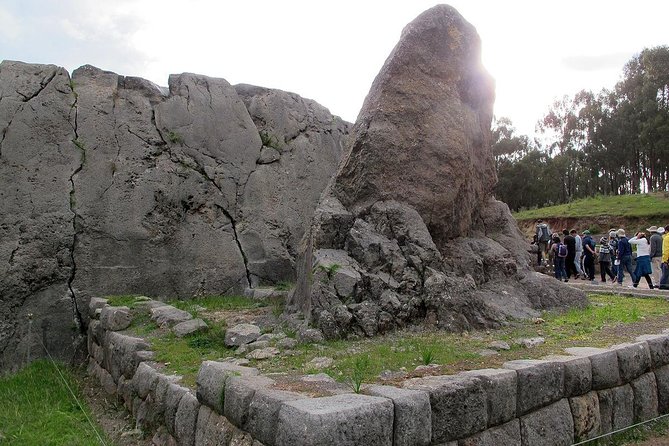
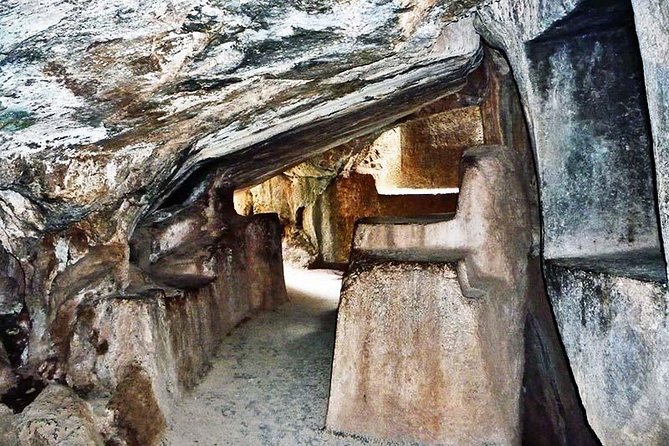
Q’enqo is closer to Cusco than the other sites, and that makes it easier to fit in your day. The name is tied to Quechua and points to labyrinth or zigzag, which fits the temple’s look and layout. The standout feature is the temple carved out of a large rock, blending tunnels and natural chambers.
The most talked-about detail is the crooked canal cut into the rock. Since the original use is not proven, you get theories instead of firm answers. Possible liquids discussed include holy water, chicha (corn beer), or blood. Those possibilities tie into a broader idea that the site may have handled death-related rituals, including embalmment or observing life patterns by how the liquid traveled.
You will not get a definitive answer on-site, and that is part of the fascination. The ruin feels like a puzzle you can see, touch, and stand around, even when the final meaning is lost.
Then there is the interior chamber with 19 small niches, arranged in a way that works like an amphitheater. The purpose is also uncertain, but the most common interpretation connects to offerings and sacrifice to sun, moon, and star gods.
Expect about 1 hour here. The location is spread over uneven ground, so wear shoes with grip. The upside is that Q’enqo often feels less crowded than bigger attractions, which helps you focus on the rock geometry.
More of the city on foot and by open-top bus
Stop 3: Puka Pucara, the red fort with water features and Inca-road hints
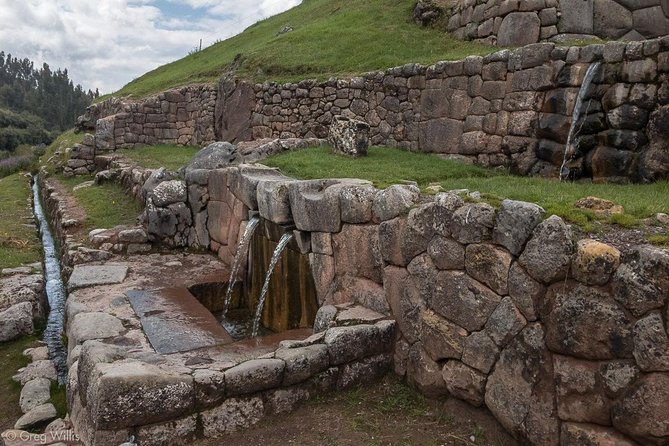
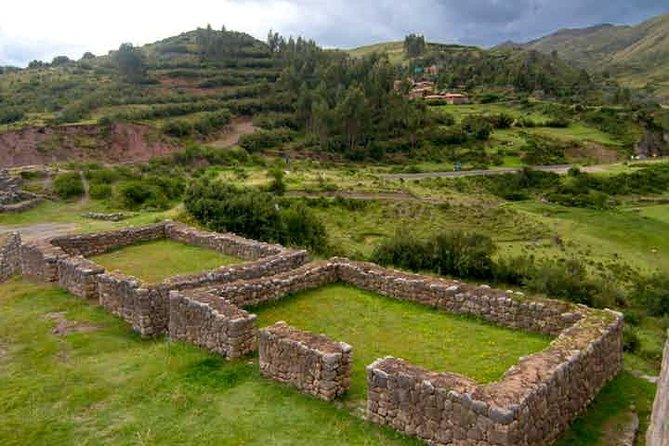
Puka Pucara means red fort. The name makes sense once you spot how the earth tones color the area and how the complex sits in a hillside setting. Like the other sites, it includes enclosures and functional-looking elements, not just temples.
The site is described with things like inner squares, canals, aqueducts, baths, and a known ancient road. That road is suggested as part of Qhapaq Ñan, the Inca road network. Even if you do not walk the entire route, it helps to connect this stop to a bigger Inca system. You start to realize they were not only building monuments, they were building networks.
One of the more interesting design points is the “three levels” wall layout. Builders used rocks of different sizes, and the ground appears more uneven than at some other archaeological sites. Your guide should point out how the outer wall includes a sinuous path that avoids cutting into protruding rocks. That is practical design, and it also feels like a respect for the natural terrain rather than a fight with it.
If you like architecture, you will probably enjoy spotting different room shapes, including trapezoidal floors. The summit area does not show traces of buildings, which can feel strange until you realize the summit itself may have served a different purpose.
Time-wise, this stop is about 1 hour. The “consideration” is similar to the others: uneven stone paths and stairs. If you have an easy walking pace, you will do fine. If you are still winded from altitude, plan to slow down and let the guide know you want to stay with the slower pace.
Stop 4: Tambomachay, El Baño del Inca and terraces fed by a constant spring
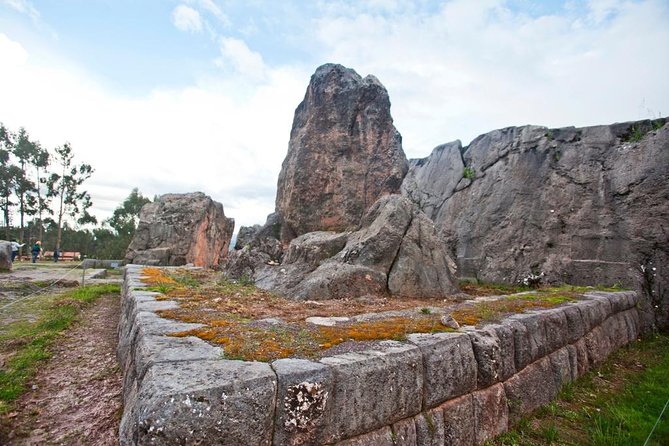
Tambomachay is the quiet finish. It sits about 4 miles north of Cusco at around 12,150 feet (3,700 meters). That high altitude setting is part of the charm, and it also explains the site’s “always active” feeling: water is built into the place.
The function is not fully certain. You may hear it described as ceremonial site, an Inca spa, a military outpost, or a mix. The most famous theory is that it was a spa, called El Baño del Inca, meaning the Bath of the Inca.
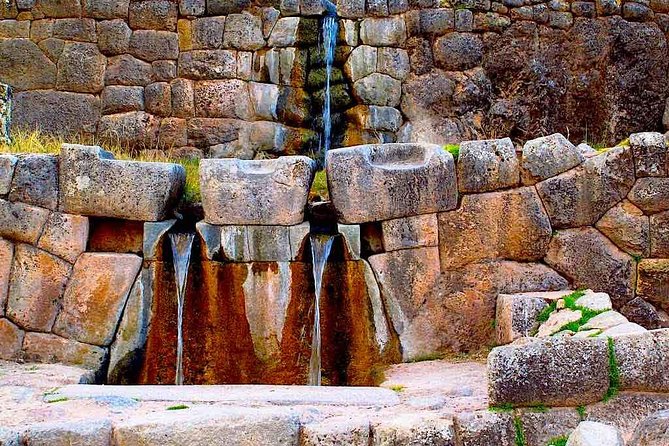
What you can actually see is what sells it. The structure includes three stepped terraces with precise Inca stonework. Some retaining walls have trapezoidal niches. And the whole complex is built over, or into, a natural spring that continuously feeds small aqueducts, canals, and waterfalls running across the terraces.
That flowing water does something for your experience. After three stone-heavy stops, Tambomachay feels restorative. It is also a strong reminder that Inca engineering often had a daily life function, not only ceremonial meaning.
Time here is about 45 minutes, so you will not get a long slow wander. But if you handle the altitude, this can be a great final stop because the sound of water helps you breathe easier and think clearer.
How the guide shapes the experience, from pacing to meaning
A tour like this lives or dies on the guide. The strongest feedback tied to this tour consistently points to guide quality, and I saw examples of named guides like Edith and Freddy doing the job well.
What matters is not just facts. It is how the guide connects details to what you are seeing. For instance, when your guide explains why Sacsayhuaman’s wall pattern is military-style yet also overlaps ceremonial ideas, you start to interpret stones instead of just staring at them. When Q’enqo’s canal becomes a set of hypotheses, you stop thinking of ruins as empty and start thinking of them as questions that people once answered with water, ritual, and timing.
Pacing also matters. In one account, the guide did not pressure people to race up stairs or keep a faster walking pace than they wanted. That is a big deal at altitude. If you are the type who likes steady effort over speed, you will probably appreciate this approach.
One more “watch for it” item from real-world experiences: some people reported an extra stop at an alpaca wool shop, which was a pleasant surprise but not listed in the outline you might see. I cannot promise it will happen on your day, but it is smart to assume there may be a quick cultural add-on. If that matters to you, ask at the start how the schedule looks and what stops are included.
What to pack for Cusco altitude and uneven ruins
You are moving between sites, but the walking happens on stone. Keep this practical:
- Wear shoes with real grip. Cusco stone can be slick and uneven.
- Bring a light layer, even if Cusco feels warm in the afternoon. High altitude weather changes fast.
- Carry water and a small snack. You do not want hunger plus altitude plus stairs.
- Go slower than you think you need to. Short climbs can make you breathless even when they look simple on a map.
The altitude consideration is not theoretical. One review specifically mentioned the walking and stairs left them breathless if they were not acclimated. This tour is short, but it is still at Cusco elevation, and Tambomachay sits higher.
My advice is simple: tell your guide early if you are struggling. A good guide will adjust the pace and help you enjoy the stops instead of suffering through them.
Value check: is $45 worth it for these four stops?
Let’s talk value in a grounded way. $45 is a fair price for a half-day style route that includes transport and a bilingual guide. You are paying for convenience: one pickup, one itinerary, and someone to connect the dots between ruins.
But you also need to factor the entrance fees. Site entry is listed at PEN 70.00 per person, plus Qorikancha ticket information at PEN 20.00 in the pricing notes. Your final out-of-pocket cost depends on what is required on the day, but either way, you should budget extra beyond the $45.
Is the time always perfect? Not always. Some people reported the tour ran slightly rushed or shorter than the stated 6 hours, and one mentioned pickup arriving late. On the flip side, other accounts praised the organization, comfortable van transport, and timing that allowed them to see everything without feeling rushed.
So the best way to decide is this: if you want a structured, efficient overview of Inca architecture and sacred sites close to Cusco, this tour is strong value. If you crave long, quiet exploration of every ruin like you are in a museum for hours, you might wish you had more time at fewer sites.
The most praised aspects in the feedback line up with what you would want: small-group comfort, smooth organization, and strong guide communication.
Should you book this Cusco Half Day City Tour?
Book it if you want a low-stress way to see four major Inca sites around Cusco, with transport included and a bilingual guide who helps you understand what you are looking at. It is also a smart pick for first-time Cusco visitors, and for anyone who already plans to do a bigger day trip and wants an efficient “side quest” of Inca ruins.
Skip it or adjust expectations if you know you want lots of time to wander slowly, take your time on steps, and linger for long photo sessions. The route is short on purpose, and that can mean limited exploration time at each stop.
If you are altitude-sensitive, go in ready to take breaks and move at your pace. The tour format should still work because the walking is spread across stops, and a good guide will keep things reasonable.
Net-net: if you like well-paced ruins with clear explanations, this one is worth your time and money, especially given the consistently high rating and the fact that it stays small-group rather than turning into a crowded bus tour.
FAQ
What time does the Cusco Half Day City Tour start?
The tour starts at 10:00 am.
How long is the tour?
It is listed as about 6 hours.
What is the group size?
The maximum group size is 15 travelers.
What is included in the tour price?
The tour includes transport and a bi-lingual guide (English and Spanish).
What entrance fees are not included?
Entrance is not included. The information lists Qorikancha PEN 20.00 per person and entrance to sites PEN 70.00 per person.
Where do I meet the tour?
You meet at HEIDI TRAVEL EIRLC, Plateros 324, Cusco 08000, Peru. The tour returns to this meeting point.
Is there walking and stairs involved?
Yes. The sites involve walking and some stairs, and if you are not used to Cusco altitude it can feel breathless, though the pace may be managed by the guide.
What is the cancellation policy?
Cancellation is free if you cancel up to 24 hours in advance. If you cancel less than 24 hours before the start time, the amount paid is not refunded.
More Tour Reviews in Cusco
- Cusco: Humantay Lake Tour with Breakfast and Buffet Lunch
★ 4.9 · 2,976 reviews - From Cusco: Moray, Maras Salt Mines & Chinchero Weavers Tour
★ 4.8 · 1,925 reviews - From Cusco: Full-Day Group Tour of Machu Picchu
★ 4.7 · 1,767 reviews - Machu Picchu Day Trip from Cusco
★ 4.5 · 1,644 reviews - Cusco: Half-Day City Tour with Sacsayhuaman and Q’enco
★ 4.6 · 1,129 reviews
Still in the City? Keep Going
- Cusco: Half-Day City Tour with Sacsayhuaman and Q’enco
★ 4.6 · 1,129 reviews - City Tour Cusco Qoricancha Sacsayhuaman y Tambomachay
★ 4.7 · 617 reviews - Cusco: Sightseeing Tour of the City on an Open-Top Bus
★ 4.0 · 481 reviews - Open Bus Cusco City Tour
★ 4.5 · 219 reviews - Cusco: City Tour | Half-Day Tour to 4 Archaeological Sites
★ 4.6 · 206 reviews
More Leaving From Cusco
- Cusco: Humantay Lake Tour with Breakfast and Buffet Lunch
★ 4.9 · 2,976 reviews - From Cusco: Moray, Maras Salt Mines & Chinchero Weavers Tour
★ 4.8 · 1,925 reviews - From Cusco: Full-Day Group Tour of Machu Picchu
★ 4.7 · 1,767 reviews - Machu Picchu Day Trip from Cusco
★ 4.5 · 1,644 reviews - Cusco: Half-Day City Tour with Sacsayhuaman and Q’enco
★ 4.6 · 1,129 reviews
Fresh in from Cusco

City Tours, compared.
 ★ 4.6Half-Day City Tour with Sacsayhuaman and Q’encoFrom $131,129 reviews
 ★ 4.7City Tour Cusco Qoricancha Sacsayhuaman y TambomachayFrom $13617 reviews
 ★ 4.0Sightseeing Tour of the City on an Open-Top BusFrom $12481 reviews
 ★ 4.5Open Bus Cusco City TourFrom $14219 reviews
 ★ 4.6City Tour | Half-Day Tour to 4 Archaeological SitesFrom $29206 reviews
 ★ 5.0City Tour in Cusco & visit Museum South American Camelid Private.From $49147 reviews
 ★ 4.5Cusco City Sightseeing, San Pedro Market, Cathedral and Qorikancha TempleFrom $59139 reviews
 ★ 4.2Half-Day City TourFrom $17129 reviews
Browse the lists this tour appears in