
REVIEW · CITY TOURS
City Tour in Cusco
Cusco can feel like it never stops. In just 4 hours, this tour threads together the big Inca sites and the colonial landmarks you keep seeing in photos. I love how the route pairs Qorikancha with its Spanish-era overlay, so you get the before-and-after story in one stop.
I also really like the way the day moves from major ruins to views, finishing with the water system at Tambomachay. One drawback to watch for is language and pickup clarity, because at least one confirmed booking reported a language mismatch and an unclear meeting point.
Key things I’d mark on your mental map
- Qorikancha plus the Cathedral: Inca foundations and colonial architecture share the same space.
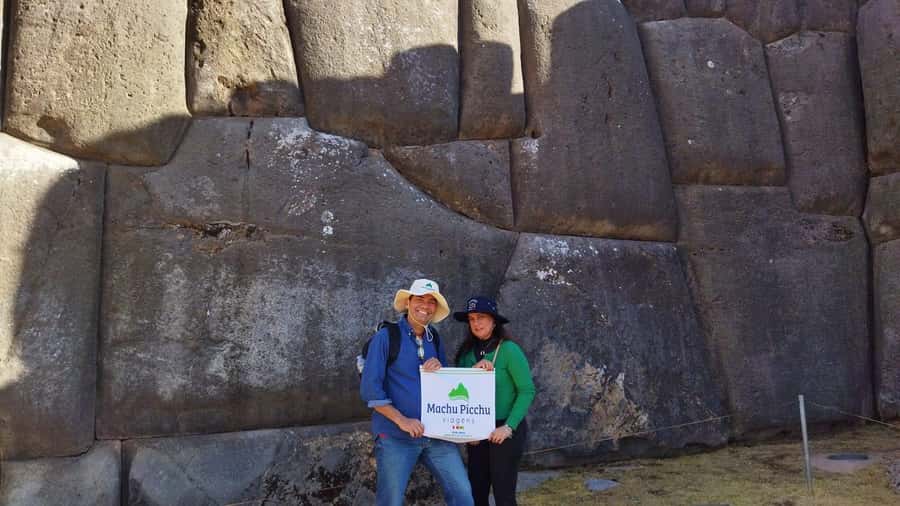
- Sacsayhuaman’s megaliths: Cyclopean stonework gives you scale fast.
- Qenqo’s ceremonial setting: A darker, ritual-feeling site that’s easy to understand with a guide.
- Puca Pucara viewpoints: Cusco from above, with the city’s layout making sense.
- Tambomachay’s functioning fountains: A working example of Inca hydraulic engineering.
More that leaves from a Cusco hotel door
- Cusco: Humantay Lake Tour with Breakfast and Buffet Lunch★ 4.9 · 2,976 reviews
- From Cusco: Moray, Maras Salt Mines & Chinchero Weavers Tour★ 4.8 · 1,925 reviews
- From Cusco: Full-Day Group Tour of Machu Picchu★ 4.7 · 1,767 reviews
- Machu Picchu Day Trip from Cusco★ 4.5 · 1,644 reviews
A 4-hour Cusco circuit that hits the key icons
This is the kind of half-day tour that helps you get oriented quickly. Cusco is built like layers, Inca on top of Inca, then Spanish on top of Inca, and you can see that logic in the way the route is set up. You’ll be moving through a lot of famous names, but the pacing is designed to keep you from feeling totally rushed.
The tour is also practical. You get an air-conditioned vehicle, a guide who is certified, and roundtrip transportation from most Cusco hotels. You pay $20 per person, which is often a sensible rate for a guided “greatest hits” in a place like Cusco, as long as you remember admission tickets are extra.
Qorikancha and the Cathedral: Inca foundations under a colonial crown
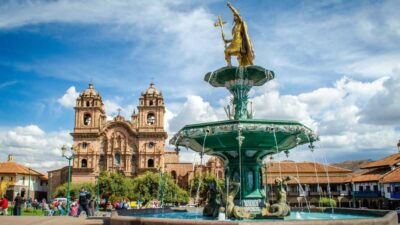
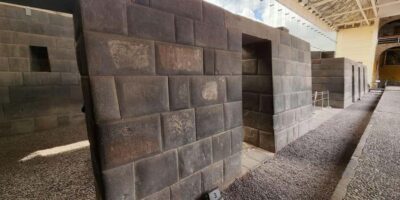
Qorikancha is the spiritual center people keep pointing to, and it’s easy to see why. When you visit, you’re not just looking at ruins, you’re reading a story written in stone: Inca worship space later repurposed with a Catholic church on top. A good guide will help you notice how those two worlds interact, instead of treating them like two separate attractions.
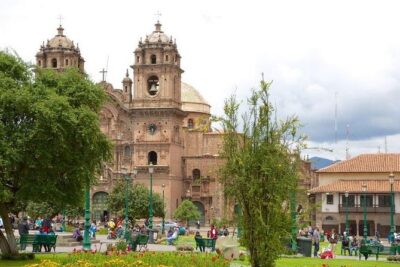
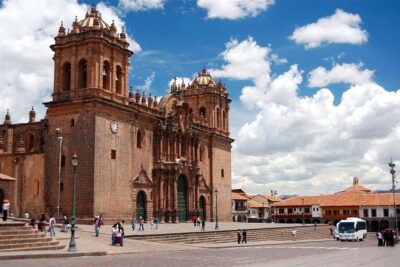
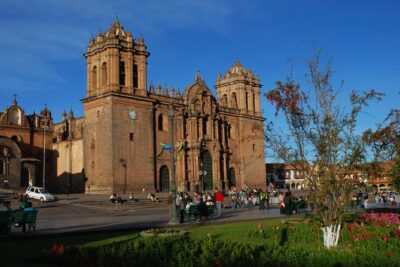
Right after Qorikancha, you’ll visit the Cathedral of Cusco. This is one of those “if you only know one thing about colonial Cusco” stops, because it anchors the baroque architecture you see across the city. What makes it interesting is the location and the layers beneath it, since the cathedral is rooted in what used to be an Inca palace.
If you’re the type who likes meaning, not just photos, this pair of stops is strong. You get a powerful contrast without having to bounce across town.
Cathedral photos are nice, but listen for the architecture story
The cathedral and church spaces can turn into photo marathons if you let them. I’d treat your time here like a mini lecture you can stand inside.
Ask your guide to point out what’s “older” and what’s “newer.” Even without going deep into technical terms, you can usually spot changes in materials, angles, and how the buildings connect. With a certified guide in Spanish, English, or Portuguese, you’ll be able to follow the explanation instead of guessing.
One note from a real-world booking: a guide named Fernando was described as helpful and polite, which matters because church stops reward someone who knows what to point at. The same case also flagged a language issue, so keep an eye on the language you select.
Sacsayhuaman: megalithic walls that make your brain recalibrate
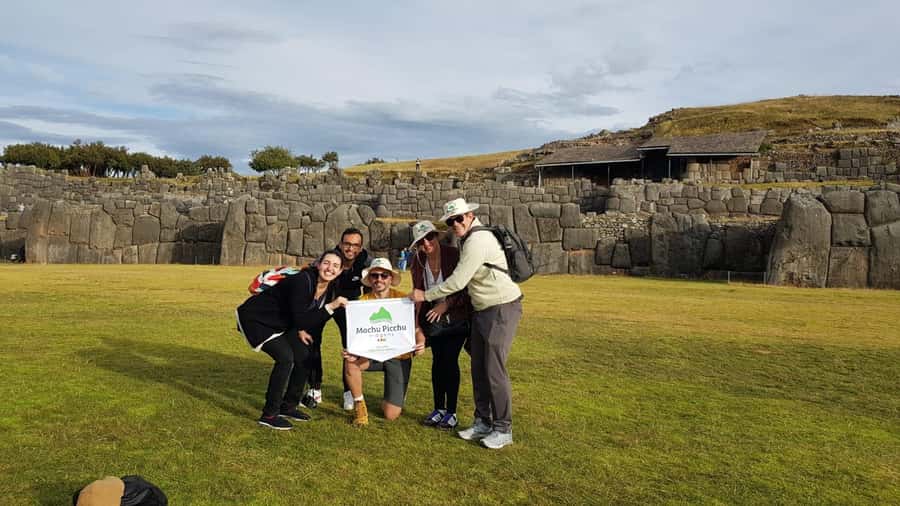
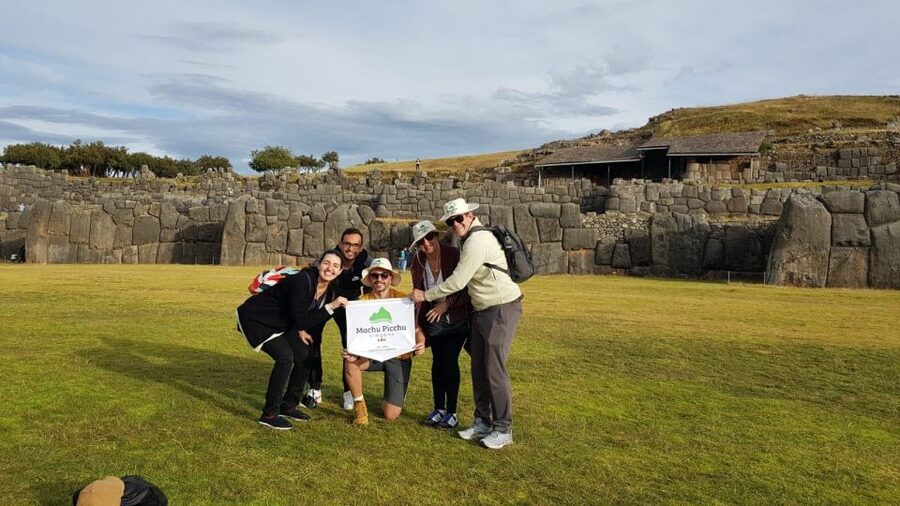
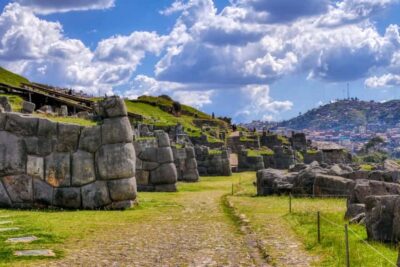
Sacsayhuaman is the fortress site that teaches you scale. The stone blocks here are huge, and the construction looks too precise to be random. When you stand close enough, you start to understand why Incas are so often discussed for engineering skill, even if you’re not an architecture nerd.
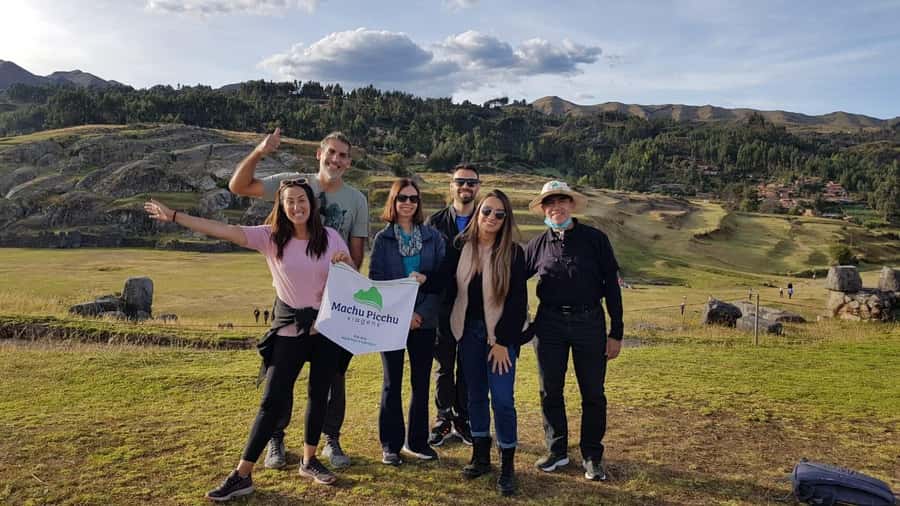
This stop is also a mood shift. You go from the city’s tight, layered streets into a more open ceremonial-fortress setting, which helps your brain separate “urban Cusco” from “ritual and power Cusco.” A guide’s job in this moment is to connect what you’re seeing to how the site worked.
Practical tip: wear shoes with grip. Cusco sidewalks and paths can be uneven, and you’ll want stable footing for photos and viewpoints.
More of the city on foot and by open-top bus
Qenqo: the gloomy ceremonial center where details matter
Qenqo has a different feel than the bright, postcard stops. It’s often described as darker or more mysterious, and your experience will be better if you slow down enough to notice the setting and the carved forms. This is where a guide earns their paycheck, because it’s easy to stand in front of a site and not know what you’re looking at.
The tour’s promise here is that you’ll understand it as a ceremonial center, with rituals and sacrifices believed to have taken place. Even if you don’t memorize everything, you’ll walk away with a clear idea of why people considered this place important.
If you like historical context, ask your guide how Qenqo fits into Cusco’s spiritual geography. That question alone tends to turn “I visited a ruin” into “I understand the logic of the space.”
Puca Pucara: Cusco from above (and why that viewpoint matters)
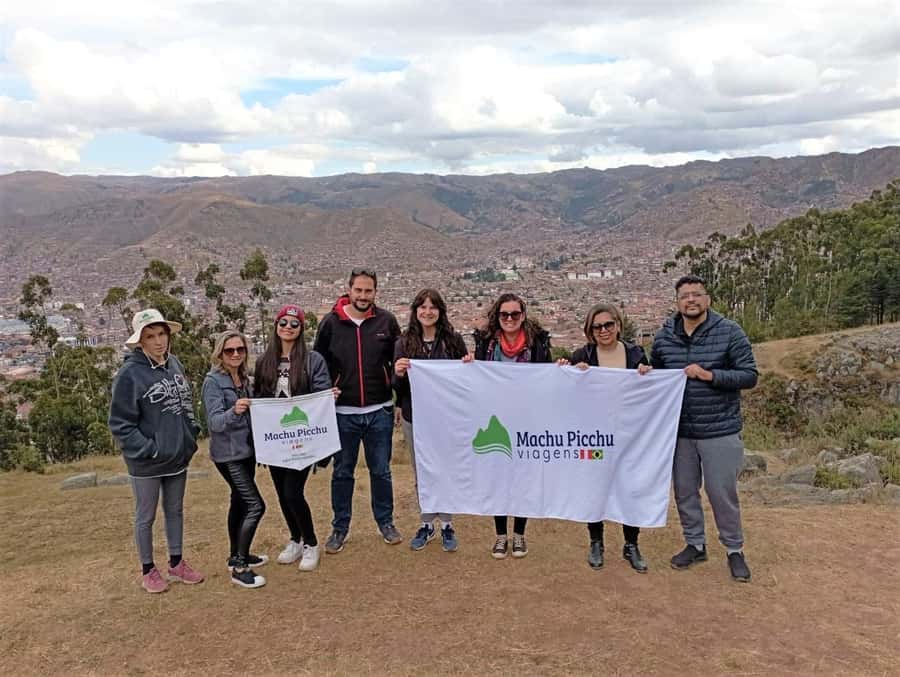
Then you move to the mountainside and Puca Pucara for views. This is more than a scenic break. A viewpoint stop like this helps you connect the map in your head to what’s actually on the ground.
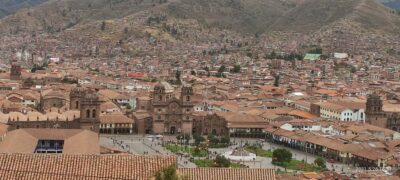
From above, Cusco’s spread becomes easier to picture. The city’s scale, the shape of the surrounding terrain, and how sites relate to each other starts to make sense. It’s one of those moments when photos are good, but orientation is the real win.
Timing matters here because weather can change fast in the Andes. If the sky is clear, you’ll get a big payoff. If clouds roll in, you may still get good visibility, but don’t assume you’ll see everything.
Tambomachay: the oldest functioning water fountains for Inca hydraulic skill
Tambomachay is a favorite kind of stop because it’s not just “look at the past.” It’s about how the Incas managed water. This area is known for irrigation channels and three water fountains that are still functioning, which is a big deal.
You’ll learn why this mattered to daily life, not only ceremonies. Water control shaped agriculture and survival, and Tambomachay gives you a tangible example of that system. Even if you’re not an engineering enthusiast, you’ll probably appreciate the practicality once you’re standing where the water runs.
Because this is a working feature, it’s also a great reminder that Incas built for use, not just display. The guided explanation helps you connect the channels you see with the living environment they supported.
The price of $20: value depends on what you bring to the day
At $20 per person for a 4-hour guided circuit, this tour can be a solid value in Cusco. The big included pieces are what usually drive costs: a professional certified guide, a vehicle with air-conditioning, a water bottle, and roundtrip transportation to most hotels.
Where the value can shrink is if you forget that admission tickets are not included. You’ll need to budget for site entry fees on top of the $20. The good news is you can plan ahead once you know you’ll be paying separate tickets, instead of scrambling at each stop.
If you’re traveling as a solo traveler or as a couple and you want maximum efficiency, this is the kind of tour that often makes sense. If you’re the type who enjoys slow wandering with no fixed stops, you might feel boxed in by the schedule. In that case, a flexible day exploring on your own could feel better.
Included logistics that actually matter: hotel pickup and a language-specific guide
Cusco can be tricky for first-timers because meeting points vary and streets get confusing fast. This tour reduces that stress by offering roundtrip transportation to and from most hotels, plus pickup in an organized way.
One detail that helps: there is one bus per language. So if you book Spanish, English, or Portuguese, you should get a group matched to that language. Still, there was at least one real booking note where the language didn’t match what was expected. That doesn’t mean it always happens, but it does mean you should verify your language in your confirmation and double-check with the provider the day before.
Also, your comfort matters. Air-conditioned vehicles can be a big plus after a few hours of walking and sun, especially if you’re sensitive to heat.
What about the group rhythm and pacing?
Even without knowing group size, you’ll feel the structure: you’ll move stop to stop for about four hours, with enough time at each site to see key features and listen to explanations. The best tours of this type are the ones where the guide gives you “what to notice” at each location.
To get the most out of this pace, you can do two simple things:
- Keep your camera ready, but don’t rush the guide’s points.
- Wear layers you can adjust. Cusco mornings and afternoons can feel very different.
If you’re traveling with kids or anyone who struggles with attention span, half-day tours often work better than full-day ones because the variety prevents boredom. It also helps that you’re covering both ruins and viewpoints, so the day changes rhythm.
Who this tour suits best
This tour is a good fit if you want a concentrated Cusco experience with minimal planning. You’ll like it if your priorities are:
- major landmarks you’ll hear about repeatedly
- a guided explanation you can follow in your language
- efficient hotel pickup and transport
It’s also a good match for people who want a first taste of Cusco’s Inca and colonial blend before committing to longer, more specialized excursions.
If you’re already deep into Inca history and you want only smaller, less famous sites, you might find the stops a bit “greatest hits.” But if your goal is clarity and coverage, it’s a strong approach.
Small practical checklist before you go
Since meals and drinks are not included, I’d plan on bringing a snack strategy. Even if you buy food between stops, you’ll enjoy the tour more if you are not hungry.
Also, bring:
- sunscreen and a hat
- water beyond the bottle, if you know you drink a lot
- comfortable, grippy shoes
- a light layer for cooler mountain air
And if language is important for you, confirm it early. One issue tied to Portuguese expectations shows that this is worth checking.
Should you book this Cusco City Tour?
I’d book this tour if you want a fast, well-organized way to see Cusco’s biggest Inca and colonial anchors in one morning or afternoon. The price is reasonable for what you get, especially because hotel pickup, a certified guide, and air-conditioned transport are included.
I would hesitate only if language matching is critical to your group, or if you hate fixed schedules and prefer to explore slowly. If you do book, confirm the guide language ahead of time and ask what the pickup location looks like for your exact hotel. Get those two basics right, and this can be a highly effective way to understand Cusco quickly.
FAQ
How long is the Cusco City Tour?
The tour lasts 4 hours.
What are the main places visited?
You’ll visit Qorikancha and the Cathedral of Cusco, Sacsayhuaman, Qenqo, Puca Pucara, and Tambomachay.
Is the guide included, and what languages are offered?
Yes. A professional certified tour guide is included, and you can choose Spanish, English, or Portuguese. The tour uses one bus per language.
Do I get hotel pickup and transport?
Yes. Roundtrip transportation to and from most Cusco hotels is included, along with an air-conditioned vehicle.
Are admission tickets included in the price?
No. Admission tickets are not included.
Is there a refund if I cancel?
Yes. Free cancellation is available up to 24 hours in advance for a full refund.
Is the tour wheelchair accessible?
Yes, the tour is wheelchair accessible.
More Tour Reviews in Cusco
- Cusco: Humantay Lake Tour with Breakfast and Buffet Lunch
★ 4.9 · 2,976 reviews - From Cusco: Moray, Maras Salt Mines & Chinchero Weavers Tour
★ 4.8 · 1,925 reviews - From Cusco: Full-Day Group Tour of Machu Picchu
★ 4.7 · 1,767 reviews - Machu Picchu Day Trip from Cusco
★ 4.5 · 1,644 reviews - Cusco: Half-Day City Tour with Sacsayhuaman and Q’enco
★ 4.6 · 1,129 reviews
Still in the City? Keep Going
- Cusco: Half-Day City Tour with Sacsayhuaman and Q’enco
★ 4.6 · 1,129 reviews - City Tour Cusco Qoricancha Sacsayhuaman y Tambomachay
★ 4.7 · 617 reviews - Cusco: Sightseeing Tour of the City on an Open-Top Bus
★ 4.0 · 481 reviews - Open Bus Cusco City Tour
★ 4.5 · 219 reviews - Cusco: City Tour | Half-Day Tour to 4 Archaeological Sites
★ 4.6 · 206 reviews
More Leaving From Cusco
- Cusco: Humantay Lake Tour with Breakfast and Buffet Lunch
★ 4.9 · 2,976 reviews - From Cusco: Moray, Maras Salt Mines & Chinchero Weavers Tour
★ 4.8 · 1,925 reviews - From Cusco: Full-Day Group Tour of Machu Picchu
★ 4.7 · 1,767 reviews - Machu Picchu Day Trip from Cusco
★ 4.5 · 1,644 reviews - Cusco: Half-Day City Tour with Sacsayhuaman and Q’enco
★ 4.6 · 1,129 reviews
Fresh in from Cusco


City Tours, compared.
 ★ 4.6Half-Day City Tour with Sacsayhuaman and Q’encoFrom $131,129 reviews
 ★ 4.7City Tour Cusco Qoricancha Sacsayhuaman y TambomachayFrom $13617 reviews
 ★ 4.0Sightseeing Tour of the City on an Open-Top BusFrom $12481 reviews
 ★ 4.5Open Bus Cusco City TourFrom $14219 reviews
 ★ 4.6City Tour | Half-Day Tour to 4 Archaeological SitesFrom $29206 reviews
 ★ 5.0City Tour in Cusco & visit Museum South American Camelid Private.From $49147 reviews
 ★ 4.5Cusco City Sightseeing, San Pedro Market, Cathedral and Qorikancha TempleFrom $59139 reviews
 ★ 4.2Half-Day City TourFrom $17129 reviews
Browse the lists this tour appears in