
REVIEW · AUSANGATE TREKS
Ausangate Trek 5 Days
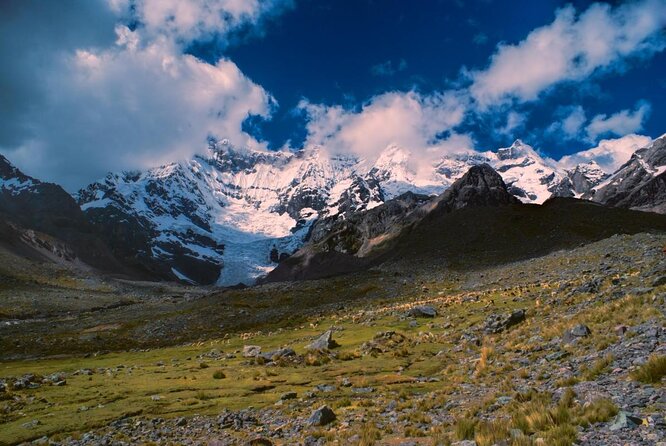
Apu Ausangate feels otherworldly. This 5-day trek from Cusco is run by Vidal Expeditions with a small-group crew, and I love the included meals that keep you fueled from breakfast to dinner. Your one real concern is altitude, with camp nights around 4,200m to 4,630m and a highest pass at 5,200m.
You meet early, 5:00am, then ride out before your first steps. A maximum of 10 trekkers means you get the kind of pacing and attention that helps on long, high days, and horses handle much of the camp equipment so you can focus on hiking.
Key highlights to look forward to
- Small group up to 10 for a more personal, flexible feel
- Horses move the equipment so your pack can stay manageable
- Hot coca tea each morning to warm you before climbs
- High passes at Arapa, Apacheta, and Palomani with big views on the way up and down
- Hot springs at Upis and Pacchanta for real recovery time
- Apu Ausangate ceremonies and a family weaving stop for cultural depth beyond photos
More of the Ausangate circuit and its lakes
- From Cusco: 7 Lakes Ausangate Trek with Breakfast and Lunch★ 4.8 · 360 reviews
- Ausangate Trek 5 Days★ 5.0 · 74 reviews
- Full-Day Tour to Ausangate 7 Lakes★ 5.0 · 56 reviews
- From Cusco: Ausangate 7 Lakes Tour with Meals★ 4.5 · 47 reviews
Cusco to Ausangate, without the big-tour chaos
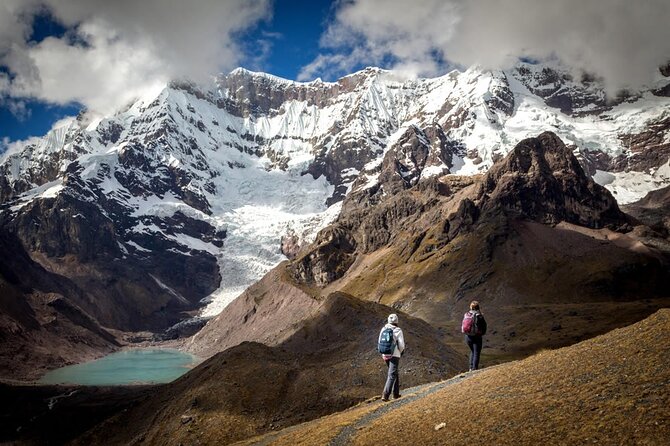
This is the kind of trek you choose when you want Peru to feel close, not packaged. With a max group size of 10, you’re not stuck in a line. You get time to pause for photos, catch your breath, and listen when the guide talks about what you’re seeing.
The other big win is that meals are handled. You get 5 lunches, 4 dinners, and 4 breakfasts, plus the hot coca tea wake-up ritual. At altitude, that matters. Cold air makes everything feel harder, so having food planned for each day removes a major stress.
Price is $660 per person for about 5 days. That can sound like a chunk until you break down what’s covered: camping equipment, horse transport for gear, and most of your food. The parts not included are manageable, too, since you only need to plan for the entrance fee (20 soles) and your own sleeping bag.
Day 1: 5:00am departure, Rondoca start, then Upis hot springs
Day 1 is an early push, and that’s by design. You meet in Cusco at 5:00am and head out by private transportation toward Tinke, with a stop to grab last-minute items and breakfast. After that, you continue to Rondoca where the trek officially begins.
Once you start hiking, you’re looking at the Apu Ausangate mountain early in the day. You’ll walk for about 2 hours to the lunch spot, then keep going another stretch to your first camp.
The day ends in a more relaxing way than you might expect. You reach the village of Upis, camp around 4,200m, then soak in the hot springs while you drink coca tea. It’s a smart contrast: you get a quiet recovery after a shorter hiking day (about 3 to 4 hours of hiking over roughly 8km). Your body feels the altitude, but the warm water helps.
Practical note: camp at 4,200m can still feel cold at night even if daytime is sunny. The trek provides camping equipment, but the sleeping bag is not included, so plan for real warmth.
Day 2: Arapa Pass and the color-changing lagoons of Puqa Q’ocha
Day 2 is a longer day, about 8 hours total with around 7 hours of hiking, and roughly 12km of distance. You start with a wake-up routine of hot coca tea, then breakfast before the climb.
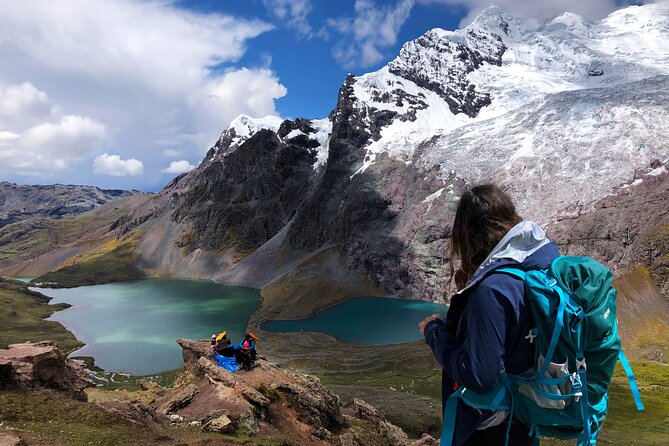
First big moment is crossing the Arapa pass at 4,850m (about 15,908 ft). From there you descend down the valley, passing the green lake of Puqa Q’ocha. Then you reach the turquoise Lake Jatun Puqa Q’ocha.
This is one of the days where the route does what good trekking routes should do: it uses geography as a show. You get views of Ausangate while you eat, then you explore the lakeshore for photos before the next climb.
After lunch, you ascend the Apacheta pass at 4,980m (about 16,338 ft). The altitude jump is real, but the payoff is a view of the turquoise lagoon below. Then you descend toward Ausangate Qocha, camp for the night around 4,630m (15,190 ft), and you’re setting up for the highest pass coming up soon.
How to think about this day: it’s not just hiking for distance. It’s hiking with repeated scenery rewards. Those lake stops act like breathing space, and they help make the long day feel less grindy.
Day 3: Palomani Pass at 5,200m and an Apu Ausangate ceremony
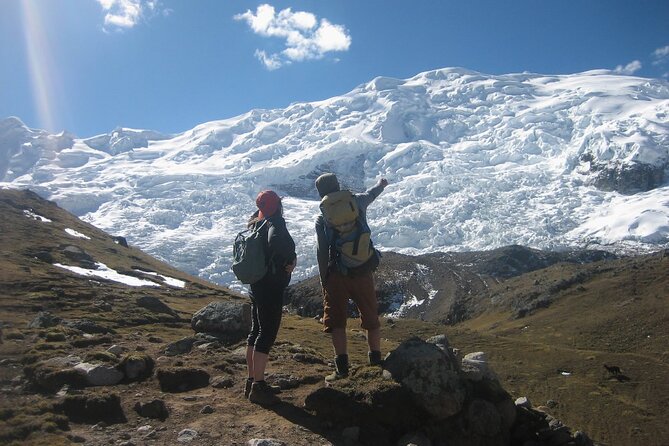
Day 3 is the high point, literally. After breakfast, you ascend to Palomani pass at 5,200m (17,060 ft). The climb takes about 2 hours, and because it’s the top of the trek, it’s also the moment where you have to be mentally steady.
Here, the guide includes a ceremony for Apu Ausangate. It’s not a quick photo-op moment. The idea is to slow down at the pass and connect the physical effort with meaning, so you feel the energy of this Andean deity as the group stands together at altitude.
Then you descend about an hour to lunch in Uchuy Phinaya. In the afternoon, you hike again for a couple hours to your next campsite, which sits around 4,500m.
This day is where you should judge your pace honestly. If you start too fast on the climb to 5,200m, it can hurt later. The best move is simple: steady breathing, small steps, and let the views keep you motivated rather than the speed you’re trying to maintain.
Also, since cold can hit hard at night at these elevations, bring a sleeping bag that can handle low temperatures. One strong theme from trek feedback is that nights can feel as cold as high-altitude trekking in other mountain regions, so warm gear matters.
More trails out of Cusco
Day 4: Pacchanta Valley, deep blue lagoons, and hot springs recovery
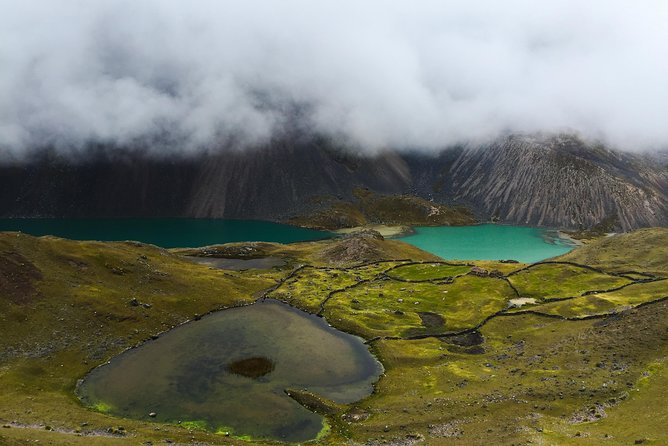
Day 4 keeps things moving, but it’s less about constant climbing and more about taking your time. You have only one pass to cross today, and you’re rewarded with deep blue lagoons and alpine glacial colored lakes along the way.
There’s also a moment of optional bravery. If you feel up to it, you can jump in for a swim. Even if you don’t, you still get the full view, and you can use the stop as a chance to rest your legs while the group regroups.
The day’s scenery is tied to the route along Pacchanta Valley. You still see the massive Ausangate mountain, but from a new angle, which helps the trek avoid feeling repetitive. This is a common problem on high trails, so the “new angle” factor is a real quality point.
Your goal is the hot springs of Pacchanta. After the hiking day, you soak and look back at Ausangate above the valley. It’s the kind of ending that makes the whole trek feel worth it, even when your legs are tired.
Expect about 6 hours total, with roughly 15km walked. Camp elevation is around 4,300m since today includes descending.
Day 5: weaving, local food ceremony, and the drive back to Cusco
Day 5 starts with breakfast after you’ve completed the loop around Ausangate. Then the cultural part continues.
You take part in a ceremony led by a local family. They prepare local food, share traditions, and show weaving techniques. It’s a good final touch, because by this point you’ve already spent days learning how the mountains shape daily life. The weaving and food element turns that into something you can actually watch and understand, not just see from a distance.
After the ceremony, you ride back to Cusco by bus, with about a 3-hour drive.
Day 5 is shorter on paper, but it can still feel like a full day because you’ll be coming down from high altitude in both body and mind. Pace yourself. You’ll be tired, but you’ll also have that quiet sense of completion that high treks often give.
Price, inclusions, and what you must plan for
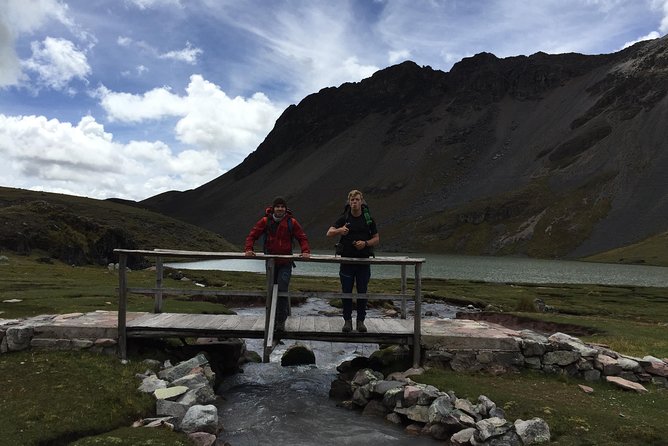
At $660 per person, this trek is priced for a remote, multi-day experience where someone is organizing logistics behind the scenes. It’s not just a route and a guide. It includes camping equipment and horses for transporting gear. Meals are mostly covered, which is a big value point for high-altitude trekking.
Here’s what you should know is included:
- Camping equipment
- Horses for equipment transport
- Lunches (5)
- Dinners (4)
- Breakfasts (4)
Here’s what is not included:
- Entrance fee (20 soles)
- Sleeping bag
That sleeping bag item is the one I’d treat as non-negotiable. When you’re hiking passes up to 5,200m and sleeping above 4,000m, “good enough” warmth can be the difference between sleep and misery. The trek’s provided equipment covers camping setup, but you bring your own bag.
Also, plan for cold mornings and potentially harsh weather. This experience requires good weather, and that matters at altitude. Even if the trek is planned carefully, mountain conditions can change fast.
Who this Ausangate trek is best for
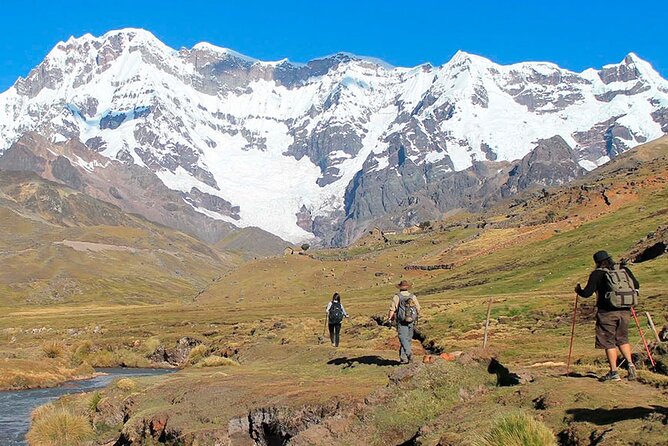
This trek fits best if you want:
- A small-group setting (max 10)
- A route that goes beyond the usual Cusco day trips
- All-in meal support so you can focus on hiking and altitude pacing
- Culture built into the experience, like the Apu Ausangate ceremony and the final family weaving stop
You’ll want moderate physical fitness. That doesn’t mean you need to be an athlete, but you should be ready for long hiking days and repeated climbs with high passes.
It may be less ideal if you:
- Struggle with altitude or know you react badly to high elevations
- Are sensitive to cold and don’t have a truly warm sleeping bag
- Want a low-effort walk with minimal thinking about pacing
Should you book Ausangate with Vidal Expeditions?
If you’re choosing an Ausangate Trek 5 Days option from Cusco, this one makes sense when value comes from real logistics. You get camping gear, horse support for equipment, and meals that keep the day from turning into a constant resource problem. Add in hot springs at Upis and Pacchanta, plus ceremonies and weaving with a local family, and you get more than just mountain views.
I’d book it if you’re excited by high passes, turquoise lagoons, and the quiet feeling of being deep in the Andes with a small crew. I’d think twice if altitude is your main worry, or if you’re not ready to handle cold nights with the right sleeping bag.
FAQ
What time does the trek start?
You start at 5:00am. The guide meets you in Cusco early in the morning and then you travel by private transportation to begin the trek.
What meals are included?
Meals are included throughout the trip: 5 lunches, 4 dinners, and 4 breakfasts. You also have hot coca tea in the mornings.
Do I need a sleeping bag?
Yes. A sleeping bag is not included, so you’ll need to bring your own.
How high does the trek go?
You cross high passes including Arapa (4,850m), Apacheta (4,980m), and the highest pass Palomani at 5,200m. Camps are at elevations around 4,200m to 4,630m during the trek.
Are hot springs and cultural activities included?
Yes. Day 1 includes hot springs at Upis. Day 4 includes hot springs at Pacchanta. There’s also a ceremony for Apu Ausangate at the Palomani pass, and on Day 5 a local family leads a ceremony with local food and weaving techniques.
What happens if I cancel or if the weather is poor?
Cancellation is free up to 24 hours before the experience’s start time for a full refund. If the experience is canceled due to poor weather, you’ll be offered a different date or a full refund.
More Trails Out of Cusco
- From Cusco: 7 Lakes Ausangate Trek with Breakfast and Lunch
★ 4.8 · 360 reviews - Cusco: Rainbow Mountain Tour and Red Valley Hike (Optional)
★ 4.7 · 149 reviews - Cusco: Full-Day Rainbow Mountain & Red Valley Trekking Tour
★ 4.5 · 121 reviews - Salkantay Trek Challenge – 3 Days / 2 Nights
★ 5.0 · 101 reviews - From Cusco: Rainbow Mountain Trek
★ 4.5 · 98 reviews
More Tour Reviews in Cusco
- Cusco: Humantay Lake Tour with Breakfast and Buffet Lunch
★ 4.9 · 2,976 reviews - From Cusco: Moray, Maras Salt Mines & Chinchero Weavers Tour
★ 4.8 · 1,925 reviews - From Cusco: Full-Day Group Tour of Machu Picchu
★ 4.7 · 1,767 reviews - Machu Picchu Day Trip from Cusco
★ 4.5 · 1,644 reviews - Cusco: Half-Day City Tour with Sacsayhuaman and Q’enco
★ 4.6 · 1,129 reviews
The Ausangate Circuit, Continued
- From Cusco: 7 Lakes Ausangate Trek with Breakfast and Lunch
★ 4.8 · 360 reviews - Excursion to Ausangate & 7 lakes with Coca Ceremony |Private|
★ 5.0 · 80 reviews - Full-Day Tour to Ausangate 7 Lakes
★ 5.0 · 56 reviews - From Cusco: Ausangate 7 Lakes Tour with Meals
★ 4.5 · 47 reviews - Ausangate and Rainbow Mountain Trek – 3 Days / 2 Nights
★ 5.0 · 35 reviews
Fresh in from Cusco
Ausangate Treks, compared.
 ★ 4.87 Lakes Ausangate Trek with Breakfast and LunchFrom $29360 reviews
 ★ 5.0Excursion to Ausangate & 7 lakes with Coca Ceremony |Private|From $10880 reviews
 ★ 5.0Full-Day Tour to Ausangate 7 LakesFrom $6956 reviews
 ★ 4.5Ausangate 7 Lakes Tour with MealsFrom $3747 reviews
 ★ 5.0Ausangate and Rainbow Mountain Trek – 3 Days / 2 NightsFrom $53535 reviews
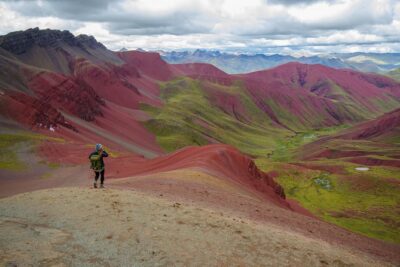 ★ 5.06 day Rainbow Mountain x Ausangate Trek – FlashpackerConnectFrom $1,05030 reviews
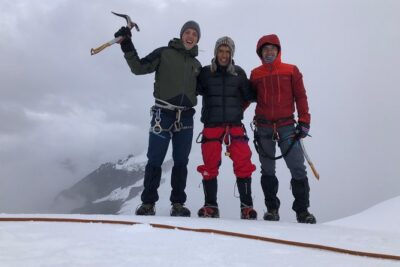 ★ 5.0Qampa Climbing 2 Days in AusangateFrom $38027 reviews
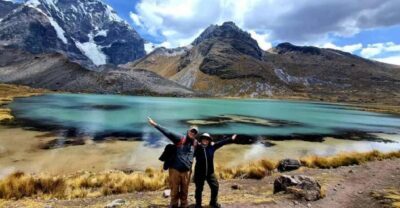 ★ 4.6Ausangate Tour 7 Lagoons full dayFrom $3617 reviews
Browse the lists this tour appears in