
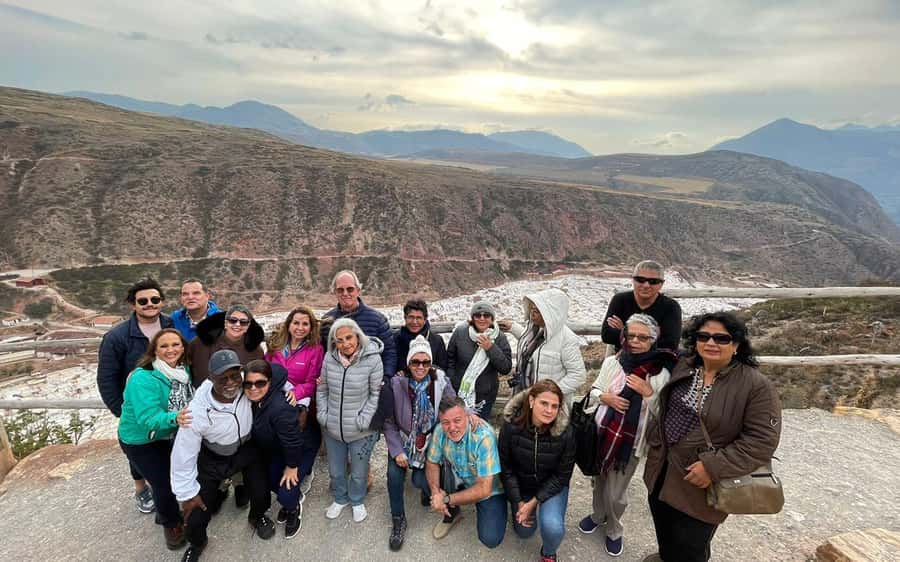
REVIEW · MARAS, MORAY & CHINCHERO TOURS
Maras Moray
Chasing salt and circles in one morning is a great Cusco reset. This half-day trip ties together Moray’s circular terraces and the salt extraction at Maras, plus a meaningful textile stop in Chinchero. I love how you get hands-on context for how Incas experimented with crops, and then you finish at a place that looks almost otherworldly at 3,000+ meters. One heads-up: it is not an easy, fully flexible walk for everyone, and if you are new to Cusco and feeling the altitude, a few moments may feel fast paced.
You spend roughly 6 hours total, with hotel pickup around 08:30, then you travel by bus through the Sacred Valley. Along the way, the guide keeps the story clear in both English and Spanish, so you are not just staring at ruins and salt pans. That bilingual rhythm is especially helpful if you want to actually understand what you are seeing.
If you want a full-day itinerary with lots of extra stops, this may feel a bit concise. But if you want something focused that still hits culture and landscape, it is a strong value.
Key highlights to look forward to
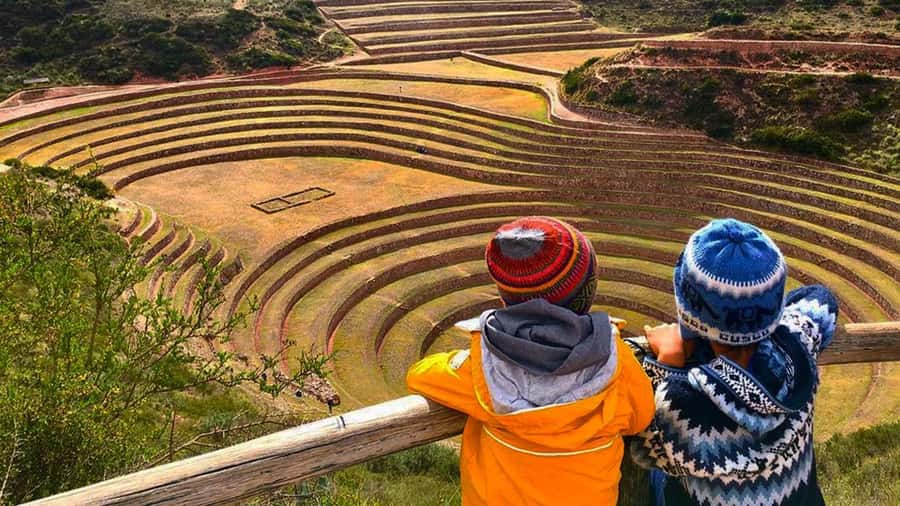
- Moray’s unusual circular agricultural terraces and what they were used for
- Chinchero textiles and natural dye processes for alpaca and llama wool
- Maras salt mines fed by high-mountain sodium chloride water sources
- Photo-friendly pacing, with time to walk around at stops
- Bilingual guiding in English and Spanish, with clear translations
- Scenic viewpoints across snowy Andean peaks and nearby Andean towns
More salt pans, terraces and weaving villages
- from Cusco: Atv Tour Maras, Moray, and Salt Mines★ 4.6 · 17 reviews
- Cusco: Maras Salt Mines & Inca Moray Half Day Trip★ 3.9 · 6 reviews
- Half day tour: Maras Salt Mines and Moray Terraces★ 4.5 · 4 reviews
- Cusco: Aventura Cuatrimoto en Moray y Salineras medio dia★ 4.0 · 3 reviews
Hotel pickup, bus ride, and the Chinchero textile stop
Your day starts with pickup from your hotel or accommodation in Cusco, usually around 08:30. Plan to be ready at the reception about 5 minutes early, since the guide will call your name before you head out. The early start matters here, because you are stacking three very different places into a single half day.
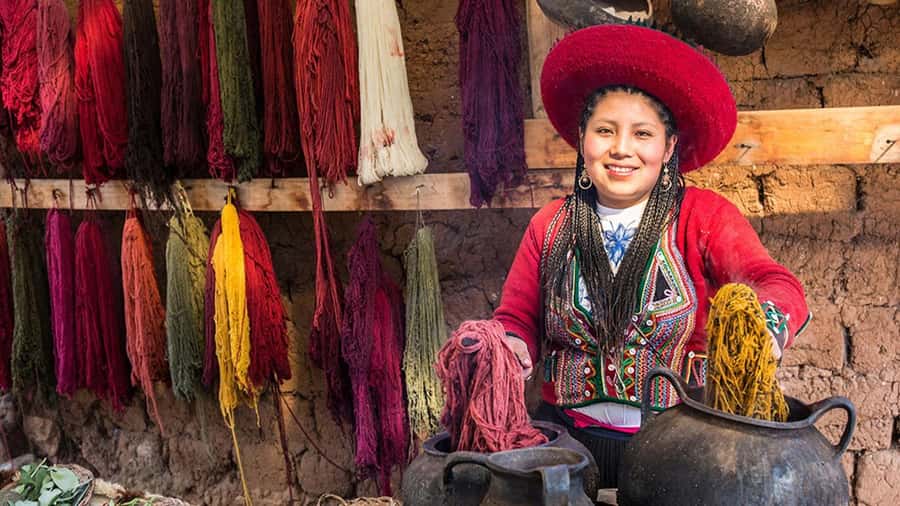
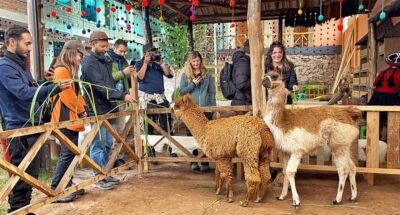
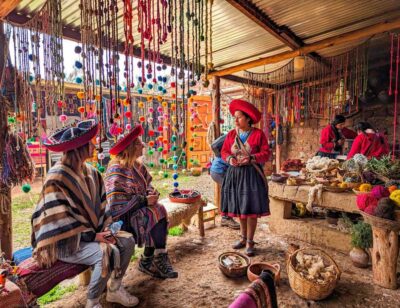
First you go to Chinchero, known for artisanal textiles made with techniques passed down over generations. If you have only ever bought woven souvenirs, this stop helps you see the craft process as a chain, not just an end product. You can visit a textile center where you learn how colors come from natural materials and how the dye process works for different wools, including llama and alpaca.
A practical note: the visit may feel more like a focused textile demonstration and sales stop than a long free stroll. In one experience, there was only a stop at a place explaining alpaca wool making and then selling goods, even though the general idea sounded broader. So if you want roaming time, I would treat Chinchero as the place to watch, ask questions, and browse, not as your long walking break.
If it is your first day in Cusco, build a little breathing room into your expectations. One traveler noted altitude heaviness on day one and that the guide sometimes spoke quickly. You can help by slowing your own pace, taking a breath before asking questions, and asking for slower repetition if you need it.
Moray’s circular terraces: agriculture that looks like geometry
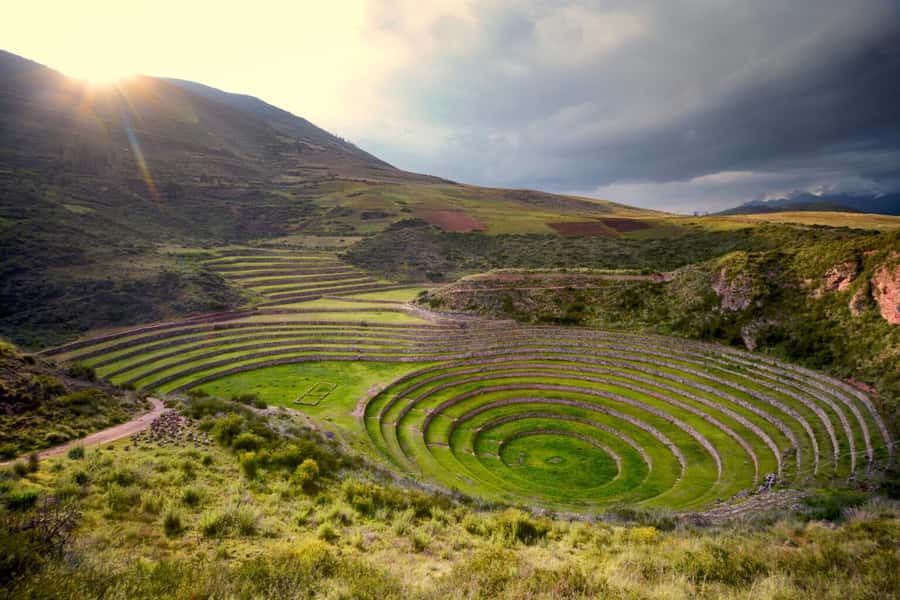
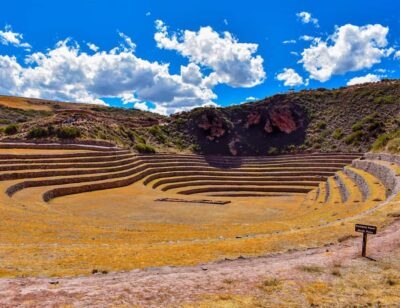
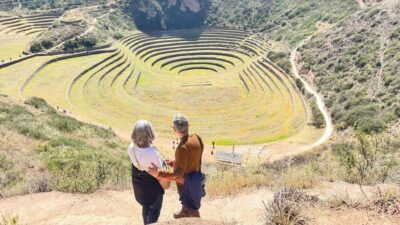
After Chinchero, you head to Moray, the place most people remember as soon as they see it. The key feature is the circular terracing, which is said to be unique among Inca constructions of its type. The terraces are arranged like nested rings, so your brain keeps trying to figure out how water, sun, and planting cycles were managed on slopes.
What makes Moray more than a photo spot is the explanation of purpose. This was an experimental site for testing and domesticating crops and plant varieties, especially corn, potatoes, and olluco. That context turns the site from a cool pattern into a working agricultural lab, and it also helps you appreciate why it sits in a mountain setting under the watch of high peaks.
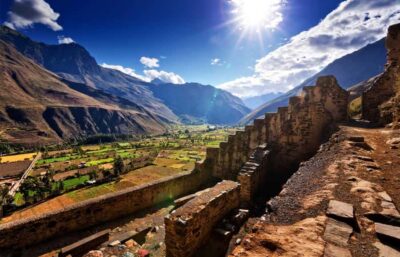
And yes, you get views. The drive and the stop around Moray include scenic mountain scenery, including snow-capped peaks that the Incas considered apus, or deities. Even if you are not thinking about religious meaning, these peaks give your photos scale, and they help you understand why people built farming and rituals in these high places.
Time here is generally enough to see the terraces and still breathe, not just speed-walk through. One review praised the overall pace and noted the group had time at each stop. Still, it is a guided route, so your freedom is best used for quick observation and short walks rather than long detours.
Maras salt mines at 3,000+ meters: the view and the process
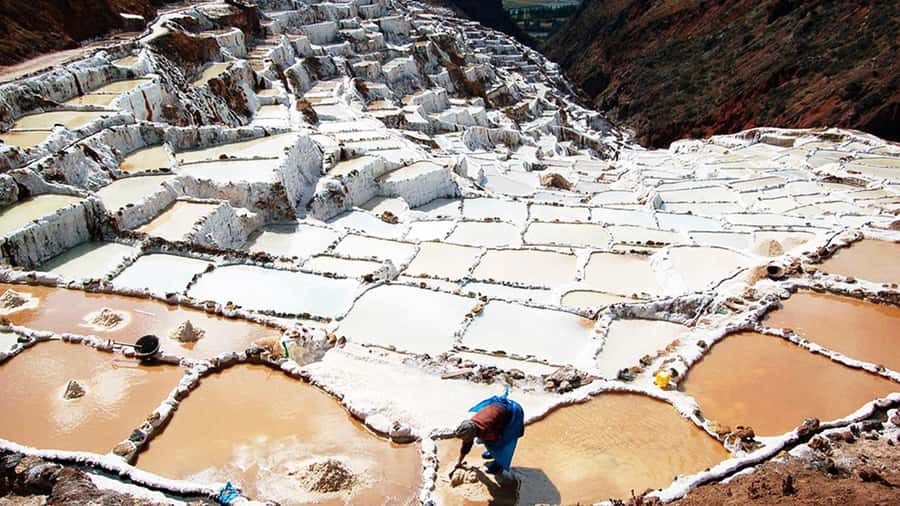
The last major stop is the salt mines of Maras, a site defined by water and geography. You are looking at salt production on lands arranged in what is described as about 3,800 separate salt plots. The big idea is that water with sodium chloride comes from mountain sources, and that is what makes salt possible at more than 3,000 meters above sea level.
When you arrive, it can feel like you are standing above a patchwork of shimmering grids. The dramatic part is not only the salt color and reflective surfaces, it is how the production areas cling to the hillside. The scenic beauty is specifically called out, and I get it. Even if you do not care about salt, the way it shapes the valley makes the site visually memorable.
Expect a practical experience more than a museum one. You are there to watch the production setting and understand the logic: high elevation, mineral-rich water, and lots of small plots working together. The guide should connect what you see to the idea that this salt works because the water travels from the mountains carrying sodium chloride.
One consideration: the terrain around the mines can be uneven and sloped. The tour is not described as high-effort, but it also is not designed for mobility needs. If you use a mobility aid or need very flat surfaces, you should skip this tour and look for a different day plan.
How the half-day works in real life: timing and photo opportunities
This is a tight schedule on purpose: roughly 6 hours total, with multiple stops and time for explanations. The typical flow is pickup around 08:30, bus travel to Chinchero, then to Moray, and finally to Maras before returning to Cusco.
The upside of this structure is that you do not lose your day to long transfers. One reviewer specifically said this is perfect if you do not want a full day trip. You get three major highlights without the fatigue load that comes with stretching across the Sacred Valley all day.
The upside can also be a downside if you are very detail-hungry about viewpoints. One experience noted that the trip passed by a few viewpoints but did not stop at 1 or 2 for quick photos. That does not mean you will always feel that way, but it is worth planning like this: bring your camera ready for roadside views, because you might not have a lot of time for frequent pull-offs.
Photo pacing seems to be handled well overall. In one review, the guide recognized that the group was taking a lot of photos and gave extra time for walking around freely while explaining in Spanish to others before switching to English. So if you want pictures, your best strategy is to stay close during the explanations, then use the provided walking moments intentionally.
Bilingual guiding that actually translates: what to expect from your guide
You are traveling with a professional guide who works in both English and Spanish. In practical terms, that means you should not feel left behind if you speak only one language. One traveler highlighted Raul by name, praising how he translated everything into good English and explained clearly while managing timing for photo breaks.
The translation rhythm matters more than people think. In that same experience, Raul explained the content to the group in Spanish first, then came to the English speakers and repeated the key points. That approach can feel slower in theory, but in practice it helps everyone understand what is happening at each stop.
If you are altitude-tired on day one, you might feel the pace more. The same review pointed out that the guide sometimes spoke a bit fast due to that first-day heavy feeling. My advice: do not be shy about asking for repetition. If you catch one key word, you usually catch the whole idea, especially for the Moray experimental-crop story and the salt mines explanation.
Also, because this is a guided bus trip, your guide becomes your decoder. You can focus less on figuring out what a ruin is called and more on why it is there.
Price and value: $18 tour, plus entrance tickets
The tour price is listed at $18 per person, and that covers pickup, tourist transport, and a professional English and Spanish guide. What is not included is important for your budget: entrance to all tourist points, including a tourist ticket for USD 20.00 and entrance to Maras for USD 7.00.
So you should expect something like $18 plus those site fees, about $25 in additional costs based on what is provided. Your all-in total could land around $43 per person when you add the tour price to the stated entrances. That math helps you judge value fast: you are paying for guided time, transport between sites, and bilingual explanations, while the per-site entries are your responsibility.
Is it good value? For most first-time Cusco visitors who want Moray and Maras without a full day, yes. You are getting a structured route and a lot of context in a short time window. If you are traveling independently and already know the sites well, you might save money by handling logistics yourself. But the included guide time is what turns these locations from scenery into understanding.
What to bring, wear, and know before you go
This tour does not require high physical effort, but it is still a half-day on uneven ground in a mountain region. For me, the safe plan is to treat it like a moderate outdoor outing.
Bring:
- Camera (you will want it for the terraces and the salt plots)
- Sports shoes (think traction and comfort, not dress shoes)
- Sunscreen (the high elevation sun is not gentle)
- Cash (since the tour points have entrance fees listed separately)
- Passport or ID card
- Personal medication
You can bring a snack and a bottle of water, since the tour lasts half a day. That is a small thing, but it helps if you hit Maras when you are already hungry from an early start.
One more expectation to set: it is enabled every day of the year, so you are not locked into a single weekday. And pickup is included, but you still need to show up at the reception on time when the guide calls your name.
If you have mobility impairments, this is not suitable based on the provided info. In that case, it is better to choose a different format that matches your needs.
Who this trip fits best
This is a smart choice if you want a compact Sacred Valley plan. I especially like it when you want Moray for the agriculture story and Maras for the striking salt mine scenery, without committing to a full day out of Cusco.
It is also a good fit if:
- You want bilingual explanations in English and Spanish.
- You prefer a guided route with enough time at each stop.
- You are okay with a set schedule and do not need extra viewpoint detours.
It might not be ideal if:
- You want lots of free wandering time at every stop.
- You need fully accessible walking conditions.
- You dislike tight timing when you are still adjusting to altitude.
Should you book Maras Moray?
I think you should book this tour if your priority is a focused, efficient day that connects three big ideas: Inca agricultural experimentation at Moray, living craft traditions in Chinchero, and mineral-rich salt production at Maras. The value works well because pickup, transport, and bilingual guide time are included, and the itinerary is built around clear highlights rather than endless driving.
Hold off if you need a lot of accessibility support or if you know you want more frequent photo pull-offs and open-ended exploring. Also, if it is your first day in Cusco and you feel altitude fatigue, give yourself a little patience for the pace, and use the moments the guide allows for walking and photos.
If you want a half-day that feels worthwhile and not rushed through the key places, this is one of the easier decisions to make.
FAQ
Where is the Maras Moray tour located?
It runs in the Cusco Region, Peru, with stops at Moray and the salt mines of Maras, plus a stop in Chinchero.
How long is the tour?
The duration is about 6 hours.
What time does the pickup happen?
Pickup is scheduled for around 08:30.
What is included in the price?
Pickup from your hotel, tourist transport, and a professional guide who speaks English and Spanish.
What is not included?
Entrance to all tourist points is not included. The tourist ticket is listed as USD 20.00, and entrance to Maras is listed as USD 7.00. Feeding is also not included.
Are there guides in English and Spanish?
Yes. The tour includes a live guide in English and Spanish.
Is the tour physically demanding?
No. It does not require high physical effort.
Does the tour run every day?
Yes, it is enabled every day of the year.
What should I bring?
Bring a camera, sports shoes, cash, sunscreen, and your passport or ID card, plus any personal medication you need.
Is it suitable for mobility impairments?
No, it is not suitable for people with mobility impairments.
More Tour Reviews in Maras
- from Cusco: Atv Tour Maras, Moray, and Salt Mines
★ 4.6 · 17 reviews - Cusco: Maras Salt Mines & Inca Moray Half Day Trip
★ 3.9 · 6 reviews - Half day tour: Maras Salt Mines and Moray Terraces
★ 4.5 · 4 reviews - Cusco: Aventura Cuatrimoto en Moray y Salineras medio dia
★ 4.0 · 3 reviews
Maras, Moray and Chinchero Again
- from Cusco: Atv Tour Maras, Moray, and Salt Mines
★ 4.6 · 17 reviews - Cusco: Maras Salt Mines & Inca Moray Half Day Trip
★ 3.9 · 6 reviews - Half day tour: Maras Salt Mines and Moray Terraces
★ 4.5 · 4 reviews - Cusco: Aventura Cuatrimoto en Moray y Salineras medio dia
★ 4.0 · 3 reviews
Fresh in from Maras
Maras, Moray & Chinchero Tours, compared.
 ★ 4.8Sacred Valley & Maras Salt Mines Tour with LunchFrom $282,227 reviews
 ★ 4.8Moray, Maras Salt Mines & Chinchero Weavers TourFrom $151,925 reviews
 ★ 4.6Sacred Valley, Pisac, Ollantaytambo, Salt Mines MorayFrom $281,058 reviews
 ★ 4.8Chinchero,Moray & Salt Mines drop-off in OllantaytamboFrom $27793 reviews
 ★ 4.8Sacred Valley: Chinchero, Moray, Ollantaytambo & Pisac+LunchFrom $25501 reviews
 ★ 4.6Sacred Valley: Maras & Moray by Quad Bike from CuscoFrom $39418 reviews
 ★ 4.7Quad bike tour Moray and Salt MinesFrom $27314 reviews
 ★ 4.8Sacred Valley Pisaq,Ollantaytambo,Chinchero with LunchFrom $28183 reviews
Browse the lists this tour appears in