
REVIEW · HORSES
Cusco: Sacsayhuaman Guided Tour and 1-Hour Horseback Ride
Four hours, three Inca stops, one horse ride. This tour stitches together Sacsayhuaman, a teaching stop at Qenqo, and a guided ride through the Sacsayhuaman National Park area, so you get culture plus motion in one afternoon.
I like two things a lot. First, the ruins are explained in a way that helps you see how the Inca built and why it mattered, especially the engineering feel at Sacsayhuaman. Second, the horse time is handled like an activity with a plan: you get a short riding induction, you get helmets and saddles, and horses are matched to your experience and mood.
One consideration: the overall timing depends on your riding comfort, so that final hour on horseback may feel more or less intense depending on how you take to the saddle.
Key points to know before you go
- Small group (up to 10) keeps the pace calmer and the guide easier to ask questions to
- Bilingual guide (English and Spanish) means you can follow the story without guessing
- Qenqo is more than ruins, you also get a lesson focused on mummification of royal people
- 1-hour ride into the Sacsayhuaman National Park area (about 6,000 acres) with chances to see local animals
- Safety support is real with helmets, a muleteer, and a guide briefing you on safe handling
More that leaves from a Cusco hotel door
- Cusco: Humantay Lake Tour with Breakfast and Buffet Lunch★ 4.9 · 2,976 reviews
- From Cusco: Moray, Maras Salt Mines & Chinchero Weavers Tour★ 4.8 · 1,925 reviews
- From Cusco: Full-Day Group Tour of Machu Picchu★ 4.7 · 1,767 reviews
- Machu Picchu Day Trip from Cusco★ 4.5 · 1,644 reviews
A four-stop Cusco day that moves at a human pace
This is a tight half-day plan that works well if you want variety without burning the whole afternoon. You start with Sacsayhuaman, then head to Qenqo for a hands-on kind of understanding of what this sacred place meant. After that comes the part many people book for, the 1-hour horseback ride near Sacsayhuaman, followed by two more archaeology stops that fit neatly into the end of the day.
The big value here is how the day is structured. It is not just “see stones, take photos, leave.” You get guided context at each site, and the horse portion is set up with safety gear and staff support, not just a casual “good luck.” In my mind, that combination is what makes the experience feel worth the $90 per person, because several parts are included rather than handled separately.
Also, this is run by Andina Expeditions, and the group size is limited to 10. That matters in Cusco, where it is easy for tours to feel rushed. A smaller group usually means you can slow down when something grabs your attention, like a particular construction detail at Sacsayhuaman or a question about how huacas functioned.
Entering Sacsayhuaman: Cusco’s old heart and Inca engineering you can read
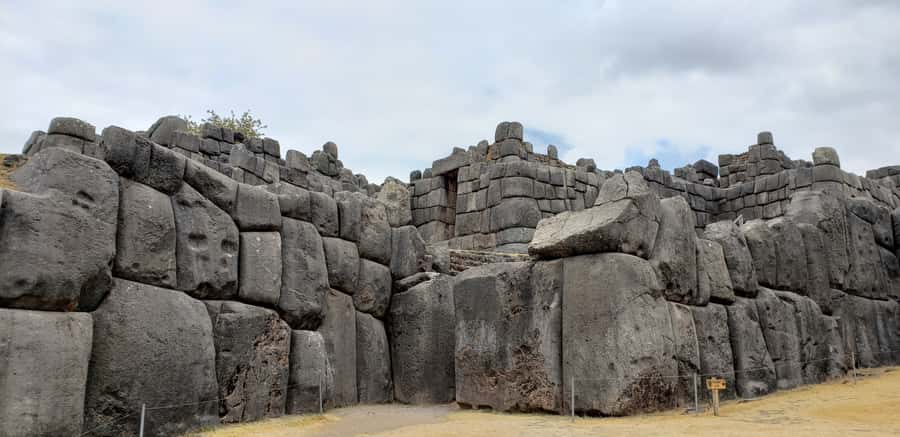
Sacsayhuaman is on the outskirts of Cusco, and it hits you fast. You arrive with a guide who focuses on what you are seeing and how to interpret it. The tour there is short, about 25 minutes, but it is the kind of stop that helps you get your bearings quickly so you do not just walk around looking at rock walls.
What I like about this portion is the way the guide connects architecture, function, and importance. When you hear the explanation, the site starts to feel like a working system rather than a collection of monuments. The Inca engineering aspect is a major theme here, and that is useful because it gives you a mental framework you can carry into the other archaeological complex you will see later.
A practical note: Sacsayhuaman is a good starting point because it sets the tone for the rest of the day. After you understand the scale and purpose of the place, Qenqo makes more sense. You start seeing the Inca idea of sacred spaces as something planned and meaningful, not random.
If you want a strong guide day, this is where it counts. The experiences I have seen with guides like Holger and Beny show a pattern: they talk clearly, they answer questions, and they keep the focus on what you can actually understand in the time you have.
Qenqo’s huaca lesson: mummification in a sacred cave
Next you drive to Qenqo, an archaeological complex described as a huaca, meaning a designated Incan holy place. This stop is also about 25 minutes, but the point is education, not just viewing.
The standout topic here is mummification of royal people. The tour explanation is tied to the idea that mummification took place in a cave located at the site. That detail is what makes Qenqo feel different from a basic ruin walk. Instead of only admiring shape and placement, you get pulled into the story of how sacred spaces were used to handle memory, lineage, and reverence.
Why that matters for you: you are not just collecting facts. You are getting a concept you can apply while you look around. A short lesson like this can turn a quick visit into something that feels like you understand why a place was built that way.
Also, Qenqo fits the rhythm of the day. After Sacsayhuaman, it is a change of pace: less about broad engineering and more about spiritual function. If your brain likes variety, this pairing works nicely.
Vieja Estancia ranch and the 1-hour ride: how safety and views meet
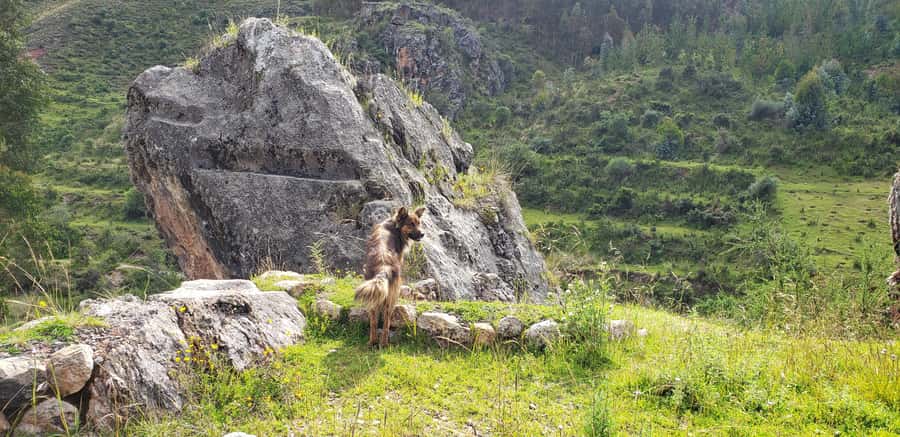
After Qenqo, you head to the Vieja Estancia Ranch & Hotels area for horseback riding. This is where the tour shifts from archaeology into movement, and it is also where the “value” shows up in the included items.
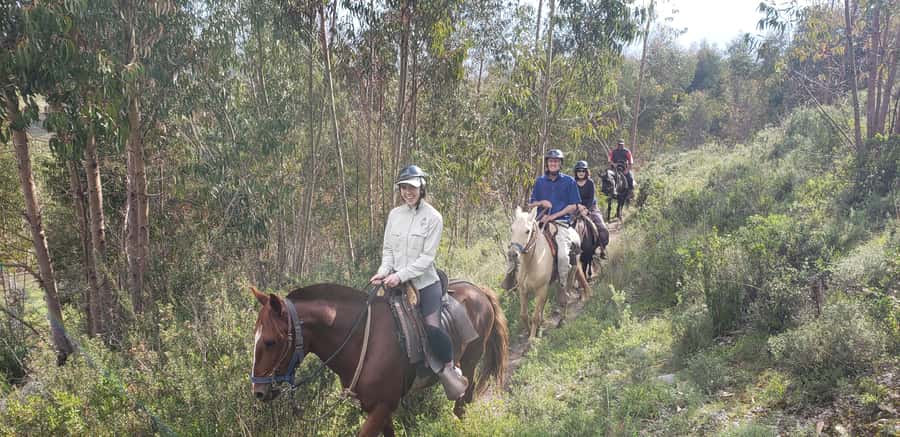
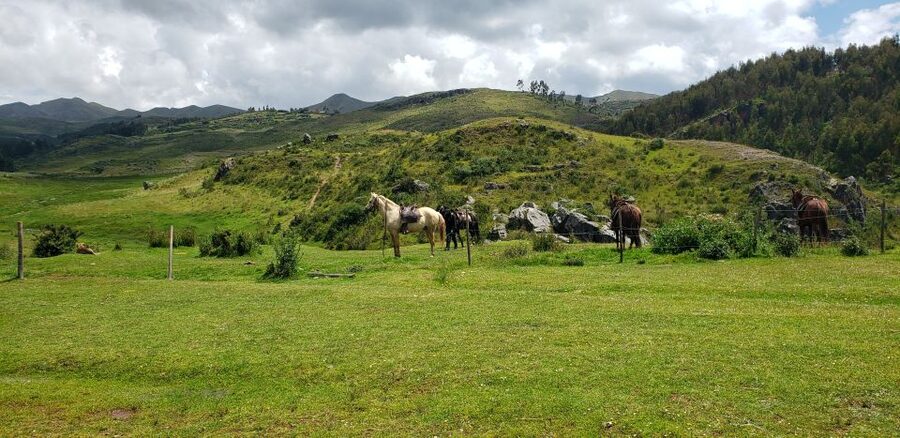
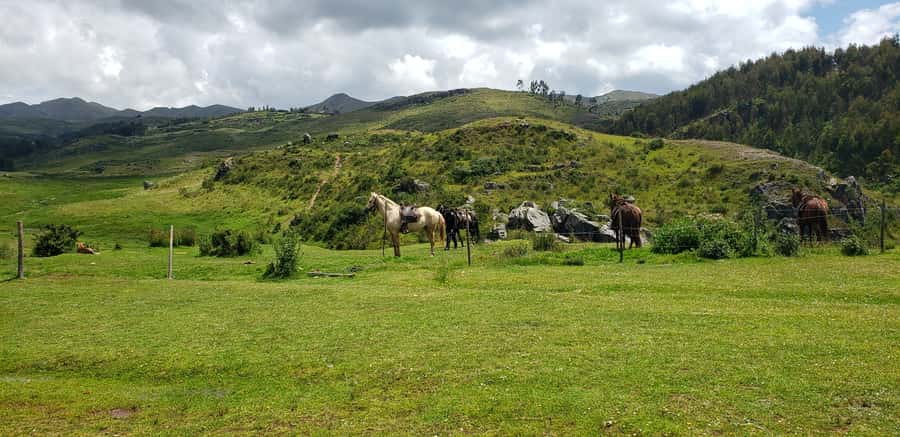
You meet the horses and muleteers, and you get a brief induction on riding basics and, importantly, how to lead horses safely. You also get a saddle and safety helmets. In plain terms, that removes a lot of stress if you are not an experienced rider.
Horse selection is another key piece. The tour says horses are chosen according to your experience and mood. That is not a small detail. A horse that matches you makes the difference between enjoying the ride and spending the hour thinking only about balance.
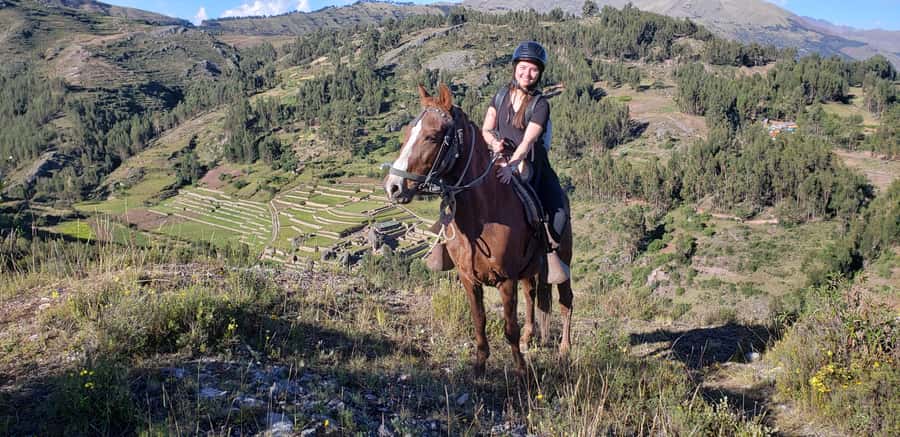
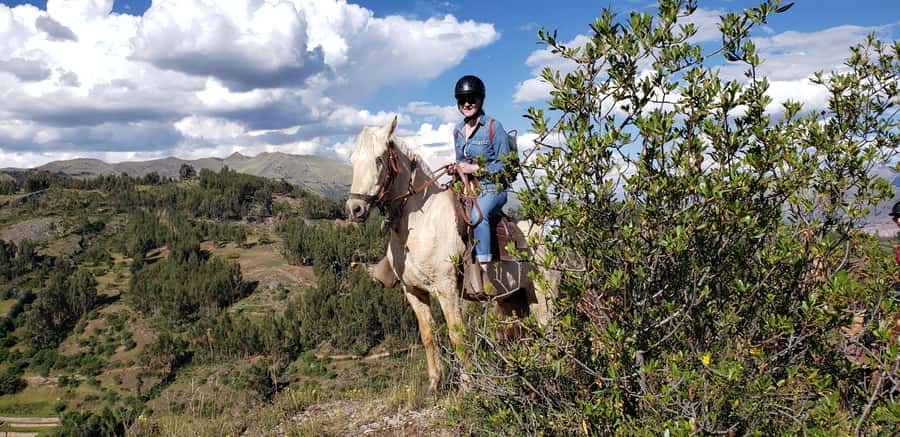
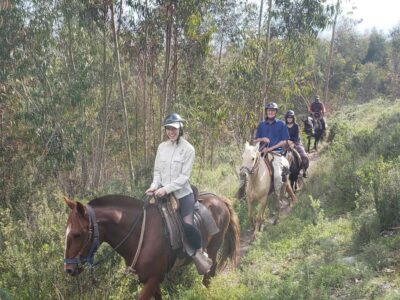
Once you are mounted, you ride for about 1 hour into the National Park of Sacsayhuaman, described as 6,000 acres. This is where you get the scenery and the “real Cusco outside town” feeling. Along the way, you may pass potato farms, see new excavations, and, if luck is on your side, spot local animals like llamas and alpacas.
If you are hoping to go beyond a slow walk, the good sign is that the experience is responsive. In examples I have seen, well-run guides can help riders work up to a trot, and sometimes even further, as long as you and the horse are comfortable. The tour is short, but the staff does not treat it like a slow parade unless that is what you need.
Two practical reminders that come straight from the tour info:
- wear long pants and closed-toe shoes
- the ride length and feel can vary based on your riding skills
More saddle time above the city
Tambomachay and Puka Pukara: water worship and a fortress edge
After the horseback ride, the tour returns you back into ruins mode. You visit Tambomachay, an ancient temple dedicated to water. This stop is about 25 minutes guided, and it gives you another angle on Incan sacred thinking.
Water is not a random topic in Cusco. What you get here is a themed stop after the mummification lesson at Qenqo. One place focuses on sacred care for royal people, another on sacred water. Even with short time at each site, that contrast helps your understanding feel more connected.
Then you head to Puka Pukara, an ancient Incan fortress. This final archaeological complex closes the loop on how Incan sacred spaces could also feel like places with strength and control. Fortress energy is a different vibe from a temple, so it keeps the day from feeling repetitive.
By the time you finish Puka Pukara, the sequence makes sense. You have already learned about engineering at Sacsayhuaman, sacred function at Qenqo, and practical sacred purposes through water and fortification. It is a tidy arc for a 4-hour outing.
Price and logistics: what $90 includes and what can surprise you
At $90 per person for a 4-hour experience, the math works best if you value an included guide plus transport plus the horse setup. Here is what is included:
- hotel pickup and drop-off from central Cusco
- a bilingual guide (English and Spanish)
- saddle and safety helmets
- muleteer support
- snacks and water
What is not included:
- entrance fees
- the Cusco Tourist Ticket Site Pass
- insurance
That split is the main practical point to plan for. If you assume entrances are covered and then you hit a ticket payment at a site, it can feel annoying when you are on a tight half-day schedule. I would treat entrance fees and any site pass as a separate line item and budget them ahead of time.
Also, insurance is not included, so if you want coverage for activities like horseback riding, you will need to handle that elsewhere. This is one of those “read the fine print” moments that can save you stress later.
Finally, this runs in a small group with a maximum of 10. Add hotel pickup from central Cusco, and you get a smooth door-to-arch approach, without needing to coordinate multiple transfers yourself.
Who this tour fits best
This is a strong match if you want a single afternoon that covers Inca sites plus an actual guided ride. It is also a good pick if you like structure, because each stop is explained in a timed way, and the horse part comes with safety gear and a muleteer.
It is not for everyone:
- Pregnant women
- people with mobility impairments
- people over 200 lbs (91 kg)
If any of those apply, skip this one and look for a different Cusco format.
If you are comfortable communicating in English or Spanish, the bilingual guide is a nice advantage. And if your riding experience is anywhere from beginner to more confident, the horse selection process is designed to adjust.
Should you book this Cusco Inca and horse tour?
I would book it if you want value in one afternoon: guided Inca ruins, a specific learning stop at Qenqo focused on royal mummification, and a safe guided 1-hour horseback ride with helmets and support included. The flow is logical, and the small group size helps keep it from feeling like a rushed factory tour.
I would pause before booking if your main goal is deep, long stays at each archaeological complex. This is built for quick understanding, not a slow walk where you lose track of time. And because entrances and the Cusco Tourist Ticket Site Pass are not included, make sure you plan those costs so the day stays smooth.
If you like variety and you are ready to ride, this is a fun, practical way to spend a Cusco afternoon.
FAQ
How long is the tour?
The total duration is about 4 hours.
How much does it cost?
The price is $90 per person.
Does the tour include hotel pickup and drop-off?
Yes. It includes pickup and drop-off from hotels in central Cusco.
Is the horseback ride included, and do I get safety equipment?
Yes. The tour includes a 1-hour horseback ride, plus a saddle, safety helmets, and a muleteer.
Are entrance fees included?
No. Entrance fees and the Cusco Tourist Ticket Site Pass are not included.
What should I wear?
Bring long pants and closed-toe shoes.
More Tour Reviews in Cusco
- Cusco: Humantay Lake Tour with Breakfast and Buffet Lunch
★ 4.9 · 2,976 reviews - From Cusco: Moray, Maras Salt Mines & Chinchero Weavers Tour
★ 4.8 · 1,925 reviews - From Cusco: Full-Day Group Tour of Machu Picchu
★ 4.7 · 1,767 reviews - Machu Picchu Day Trip from Cusco
★ 4.5 · 1,644 reviews - Cusco: Half-Day City Tour with Sacsayhuaman and Q’enco
★ 4.6 · 1,129 reviews
More Saddle Days Above Town
- Cusco: 3-Hour Horse Riding Tour to the Temple of the Moon
★ 5.0 · 105 reviews - Cusco: Half-Day Horseback Riding at Devil’s Balcony
★ 4.9 · 89 reviews - Horse Riding Chacan Mountain And Temple Of The Moon
★ 5.0 · 78 reviews - Horseback Tour in cusco to Temple of the Moon & Hidden temples
★ 5.0 · 54 reviews - Horseback Riding Plus Tour to Sacsayhuaman, Quenqo, Puka Pucara and Tambomachay
★ 5.0 · 40 reviews
More Leaving From Cusco
- Cusco: Humantay Lake Tour with Breakfast and Buffet Lunch
★ 4.9 · 2,976 reviews - From Cusco: Moray, Maras Salt Mines & Chinchero Weavers Tour
★ 4.8 · 1,925 reviews - From Cusco: Full-Day Group Tour of Machu Picchu
★ 4.7 · 1,767 reviews - Machu Picchu Day Trip from Cusco
★ 4.5 · 1,644 reviews - Cusco: Half-Day City Tour with Sacsayhuaman and Q’enco
★ 4.6 · 1,129 reviews
Fresh in from Cusco

Horses, compared.
 ★ 5.03-Hour Horse Riding Tour to the Temple of the MoonFrom $65105 reviews
 ★ 4.9Half-Day Horseback Riding at Devil’s BalconyFrom $8589 reviews
 ★ 5.0Horse Riding Chacan Mountain And Temple Of The MoonFrom $6578 reviews
 ★ 5.0Horseback Tour in cusco to Temple of the Moon & Hidden templesFrom $6554 reviews
 ★ 5.0Horseback Riding Plus Tour to Sacsayhuaman, Quenqo, Puka Pucara and TambomachayFrom $9540 reviews
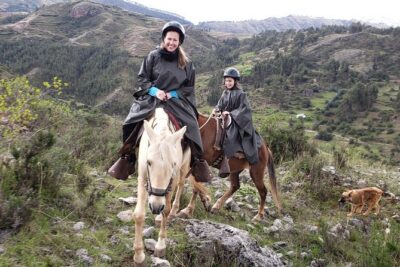 ★ 5.0Half day Horseback Riding tour around Sacsayhuaman parkFrom $7537 reviews
 ★ 4.1Rainbow Mountain Horseback Riding Tour + lunchFrom $7510 reviews
 ★ 3.8Rainbow mountain horseback riding tour + Buffet LunchFrom $709 reviews
Browse the lists this tour appears in